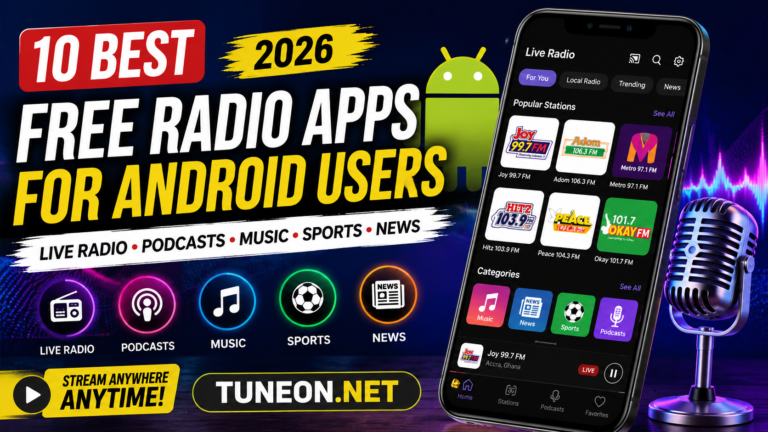

Radio remains one of Ghana’s most important mass-media platforms, but the way people listen is changing. Traditional FM broadcasting continues to connect stations with local communities while internet streaming, smartphones, smart speakers, websites and mobile applications are allowing listeners to hear stations beyond the limits of a transmitter.
Ghana’s radio landscape remains large
The National Communications Authority’s second-quarter 2026 information lists 793 authorised FM broadcasting stations, with 571 reported as operational at the time of the publication. The authorisations span commercial, community, campus, public and public-foreign categories.
The size of the sector demonstrates why radio remains significant. It also explains why online radio directories and streaming platforms can be useful. A listener may know the name of a station but not its frequency, or may want to hear a station while travelling outside its terrestrial coverage area.
FM broadcasting still matters
FM radio provides immediacy. A local presenter can discuss traffic, weather, community events, sports and breaking developments in a way that feels close to the audience. Radio also works in places where internet access is limited or expensive.
For advertisers, local radio can provide access to defined geographic audiences. For communities, it can provide a platform for local information and public discussion. These strengths mean digital audio is not simply replacing FM; in many cases it is extending it.
Streaming removes geographic barriers
Internet streaming allows a station’s audio signal to travel beyond the area served by its FM frequency. A Ghanaian living abroad can listen to a favourite station from home, while a traveller can continue listening after leaving the station’s terrestrial coverage area.
Streaming also creates new technical responsibilities. A station needs a stable audio source, a reliable streaming server, sufficient bandwidth and a player that works across common browsers and devices. Metadata such as station name, logo and programme information can improve the listening experience.
Mobile listening is increasingly important
Smartphones have changed radio habits. Instead of sitting beside a traditional radio receiver, listeners can carry hundreds of stations in a pocket. This has made mobile-friendly websites and applications important parts of the radio ecosystem.
A good mobile radio interface should make the essential action obvious: choose a station and listen. It should not force users through unnecessary screens. Buttons should be large enough to tap, the player should remain understandable and pages should load quickly.
The role of online radio directories
A radio directory can solve a discovery problem. With hundreds of authorised stations, listeners may not know which stations serve a particular region or genre. A directory can organise stations by country, city, genre, language or format.
However, directories should be careful with station information. A stream can go offline, a station can change its website or a frequency can change. Good directories therefore need a process for updating station information and identifying broken streams.
Digital Audio Broadcasting and Ghana
The National Communications Authority has also published information on Digital Audio Broadcasting. Its current information says the service is on trial and explains that DAB+ compatible receivers or devices are required. Digital broadcasting technologies can offer another path for radio distribution, although FM remains central to the existing broadcasting environment.
Why radio stations need a digital strategy
A modern station should treat its website and social channels as extensions of the broadcast operation. The website can provide the station identity, programme schedule, presenter information, contact details and a working player. Social media can promote programmes and engage listeners, while podcasts and clips can extend selected content beyond the live broadcast.
The goal is not to duplicate everything everywhere. Each channel should have a purpose. Live radio is immediate; a podcast is available on demand; a short video can capture a moment; a website can organise information.
Advertising and monetisation
Digital radio creates additional advertising possibilities but also requires careful measurement. Advertisers may want information about listening duration, audience geography, device type or campaign performance. Publishers and station owners should provide transparent metrics rather than inflated claims.
Advertising should also respect the listening experience. Too many interruptions can frustrate users. A clear balance between commercial content and programming helps maintain trust.
Sports radio and live coverage
Sports is particularly suited to radio because listeners can follow commentary while travelling, working or doing other activities. A station can combine live commentary with analysis, interviews and post-match discussion. Online streaming makes that coverage accessible to listeners outside the station’s normal FM range.
Music radio and discovery
Music stations remain important discovery channels. A listener can hear an emerging artist on radio before searching for the song online. This creates a relationship between broadcasters, artists, labels, DJs and streaming platforms.
Stations can strengthen that relationship by publishing accurate song information and supporting local talent. For artists, being included in credible radio programming can still be valuable even when most streaming occurs online.
Community and gospel radio
Gospel, community and specialist radio formats serve audiences with specific interests. Their value often comes from consistency and trust. A station that understands its audience can create programmes that are highly relevant even when the overall audience is smaller than that of a national commercial station.
Technical reliability matters
Listeners quickly abandon a stream that repeatedly stops. Radio platforms should monitor stream availability, bitrate stability, server response and player performance. Station logos should be compressed appropriately, and unnecessary scripts should be avoided because they can slow down mobile pages.
What makes a good online listening experience?
A strong online radio experience combines discovery, speed and reliability. Listeners should be able to browse stations, see what is playing when metadata is available, start playback easily and return to the player without losing their place.
The future of Ghanaian radio
Ghana’s radio future is likely to be multi-platform. FM will remain important, while streaming, podcasts, digital broadcasting and mobile applications will continue to grow around it. The winners in this environment will not necessarily be the platforms with the most features; reliability, good programming and an easy listening experience are likely to remain central.
Final takeaway
Ghana’s large authorised radio sector creates both challenges and opportunities for digital audio. Streaming can extend the reach of FM stations, while directories and mobile applications can make discovery easier. For listeners, the result is greater choice. For broadcasters, it is a requirement to think beyond the transmitter and build a dependable digital presence.
What station owners should monitor
Online radio performance is not only about whether a stream is technically online. Station owners should monitor listener complaints, buffering, stream availability, metadata accuracy and the quality of the player on mobile devices. A station may have an excellent programme but still lose online listeners if the stream repeatedly stops.
Routine checks can identify problems before they become widespread. Station teams can also maintain a clear escalation process so that technical issues are reported and fixed quickly.
Programme schedules can improve discovery
A station website becomes more useful when listeners can see what is on air. A simple schedule can help people decide when to return for a favourite programme. Presenter pages, show descriptions and programme archives can add further context.
Schedules should be updated when programmes change. Outdated information can reduce trust, particularly when a listener visits specifically because of a published programme time.
Radio and podcasts can complement each other
Not every radio programme needs to remain available as a full podcast, but selected interviews, discussions and explainers can be repackaged for on-demand listening. This gives audiences another way to consume content when they cannot listen live.
Stations should ensure that republished material has appropriate rights and clear information about the programme. Good audio editing also matters because on-demand listeners may expect a different experience from live radio.
Music rights and professional operations
Music broadcasting involves rights and licensing responsibilities. Stations and digital platforms should understand the agreements that apply to their broadcasts and online services. Keeping proper records can make administration easier and reduce avoidable disputes.
Artists and producers also benefit when credits and metadata are accurate. Correct information helps listeners find the music and makes it easier for industry participants to track their work.
Why Ghana radio can serve the diaspora
Online streaming creates a direct link between Ghanaian stations and listeners abroad. A diaspora listener may want local news, music, sports or community programming while living thousands of kilometres away. This can strengthen cultural connections and create a wider audience for Ghanaian content.
Stations can serve these listeners without abandoning local audiences. A clear programme identity, reliable stream and consistent digital presence can support both groups.
How radio platforms can improve station discovery
Directories can organise stations by location, language, genre and format. Search and filtering tools are particularly useful when a platform contains many stations. Each listing should provide accurate station information and a direct path to listening.
Platforms should also avoid presenting a station as available when its stream has not been checked. Broken links create a poor experience and can make users distrust the entire directory.
Accessibility matters
Online radio players should consider users with different accessibility needs. Clear button labels, readable text, keyboard-friendly controls where possible and appropriate contrast can make a platform easier to use. Accessibility improvements often help everyone, particularly on small mobile screens.
What advertisers should look for
Advertisers considering digital radio should ask how audience figures are measured and what period the numbers cover. Listening data should be presented honestly, with clear definitions for streams, sessions and unique listeners. Transparent reporting makes it easier for advertisers to compare campaigns.
Where the industry can grow
Ghana’s large radio ecosystem provides room for specialised digital products. Platforms can build tools for station discovery, programme schedules, podcasts, live sports audio, diaspora listening and local-language programming. Broadcasters can also create stronger direct relationships with listeners through newsletters, mobile applications and community platforms.
Final takeaway
The future of Ghanaian radio is not a simple choice between FM and the internet. The two systems can reinforce each other. FM provides established local reach, while streaming expands access and creates new digital opportunities. Reliable technology, strong programming, accurate information and a good listener experience will remain the foundations of successful radio.
SEO keywords: Ghana radio stations, Ghana radio online, listen to Ghana radio, online radio Ghana, FM radio Ghana, Ghana streaming radio, digital audio Ghana, Ghana radio stations online.
About the Author