
Five new telephony sites in Ghana’s Ashanti Region are expected to be activated by the end of October 2026, according to a report by the Ghana News Agency on October 15. The announcement is relevant not only to calls and messaging but also to digital services that rely on mobile data, including internet radio, music streaming, online news and audio apps.
Communications Minister Samuel Nartey George made the announcement during an inspection of Rural Telephony Project sites in the Sekyere Afram Plains District. The report said telecommunications services would also be extended to three additional sites in the district, while officials worked to complete outstanding construction and address implementation challenges.
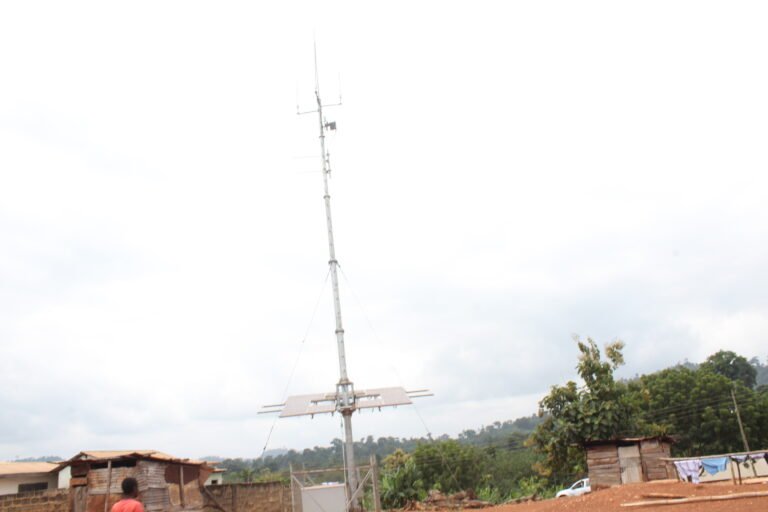
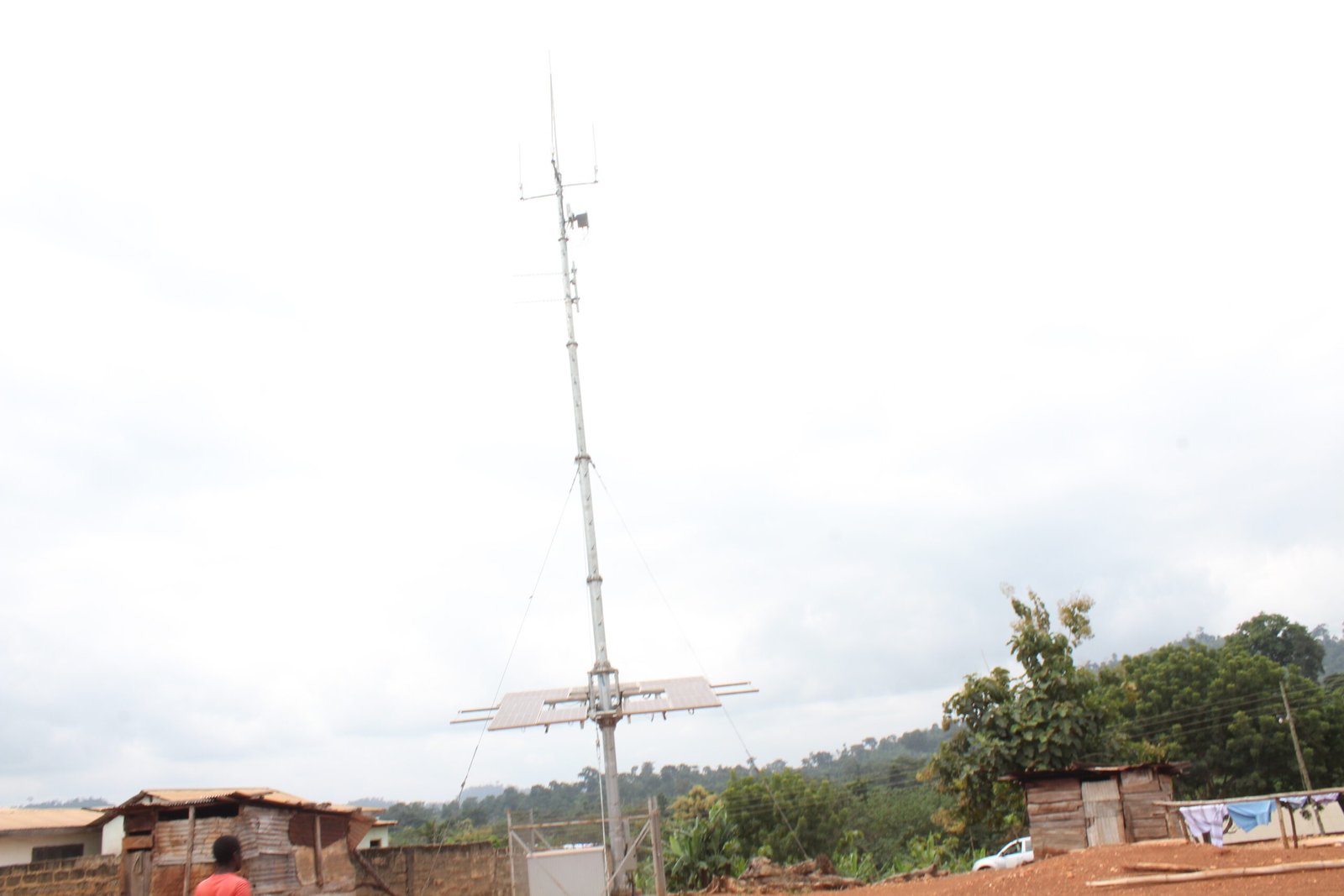
Photo note: A rural telephony mast in Ghana used to illustrate connectivity infrastructure; it is not identified as one of the sites inspected in October 2026.
Why rural connectivity matters to radio listeners
Traditional FM radio remains important because listeners can receive broadcasts without paying for mobile data or relying on a smartphone. Internet radio adds another route: listeners can open a station’s website or app and hear the same stream while travelling, working away from home or living outside the station’s transmitter coverage area.
That convenience depends on a stable internet connection. When mobile data coverage is weak, listeners may experience buffering, long connection times or repeated interruptions. A stronger signal can help a device maintain a data session, although the quality of the experience also depends on network congestion, handset capability, the streaming service and the audio format used by the station.
New telephony sites could therefore widen the places where residents can access online audio, but it would be premature to promise that every community will immediately receive fast or uninterrupted streaming. The actual improvement will depend on when the sites become operational, which network technologies are enabled and how well the coverage reaches homes, roads and workplaces.
What officials have announced
The Ghana News Agency reported that the minister inspected four project sites at Nyameama No. 1, Nyameama No. 2, Dawia and Abenua. He asked the Ghana Investment Fund for Electronic Communications and contractors to speed up work on three additional communities in the Sekyere Afram Plains District.
The report also said the government was collaborating with MTN Ghana to deploy 800 new telecommunications sites nationwide. These are separate elements of a wider connectivity agenda and should not be confused with the five Ashanti sites expected to be activated by the end of October.
The minister emphasised the need to upgrade existing rural networks from 3G to 4G, warning that progress in urban digital services could widen the digital divide if rural communities were left behind. He also announced plans for an audit of inherited Rural Telephony Project sites to establish which facilities were complete and genuinely operational.
How better coverage could help local communities
Connectivity affects more than entertainment. Reliable mobile services can help small businesses communicate with customers, support mobile money transactions, provide access to educational materials and make it easier for residents to use online public services. For people who rely on radio for news, music and community information, internet access can provide another way to reach broadcasters.
Local radio stations may also use digital platforms to reach listeners who have moved away from their home communities. Diaspora audiences can listen through station websites and apps, while advertisers can connect with listeners across different locations. Better coverage may expand that potential audience, but stations still need reliable streams, suitable mobile pages and clear programme information.
For a listener using a limited data bundle, audio quality and efficient streaming design matter. Stations can help by offering stable streams, avoiding unnecessarily heavy pages, providing a clear play button and explaining how listeners can reduce data use. Users should also be able to switch back to conventional FM where available.
What radio stations and streaming services should do
Broadcasters should test their streams on different networks and lower-cost smartphones, especially in areas where coverage may fluctuate. They should monitor whether a stream is online, make station names and logos easy to identify, and give listeners a simple way to report broken links. A strong transmitter signal or a new mobile tower does not automatically fix an unreliable stream hosted on a separate server.
Radio services should also avoid forcing autoplay that consumes data without clear user consent. A listener-friendly experience makes it easy to pause playback, see which station is playing and understand when audio may use mobile data. For station owners, these practical details can be as important as adding new streaming features.
What listeners should watch before the end of October
The next useful update will be confirmation that the sites have actually been activated and are delivering service. Residents should assess real-world signal quality rather than rely only on announcements. The most helpful checks include whether calls connect consistently, whether mobile data works indoors and outdoors, and whether the network remains usable during busy periods.
For online radio listeners, try a station stream in more than one location and compare it with FM reception where possible. If buffering continues despite a strong signal, the cause may be the stream, the device or network congestion rather than the coverage site alone.
Sources and TuneOn updates
Read the Ghana News Agency report on the Ashanti telephony sites and consult the National Communications Authority’s information on telecom infrastructure. TuneOn covers radio, streaming and music listening across Ghana. Visit TuneOn.net to explore stations and read our guide to FM, streaming and digital audio in Ghana.
Frequently asked questions
When are the five Ashanti sites expected to be activated?
The minister said they were expected to be activated by the end of October 2026. That is a target, not confirmation that all five are already operational.
Will new sites make internet radio work everywhere?
No. Coverage depends on the locations served, technology, congestion, the listener’s device and the quality of the radio stream.
Can listeners still use FM radio?
Yes. Internet radio can complement traditional FM; listeners can use whichever option is more reliable and convenient in their location.
About the Author