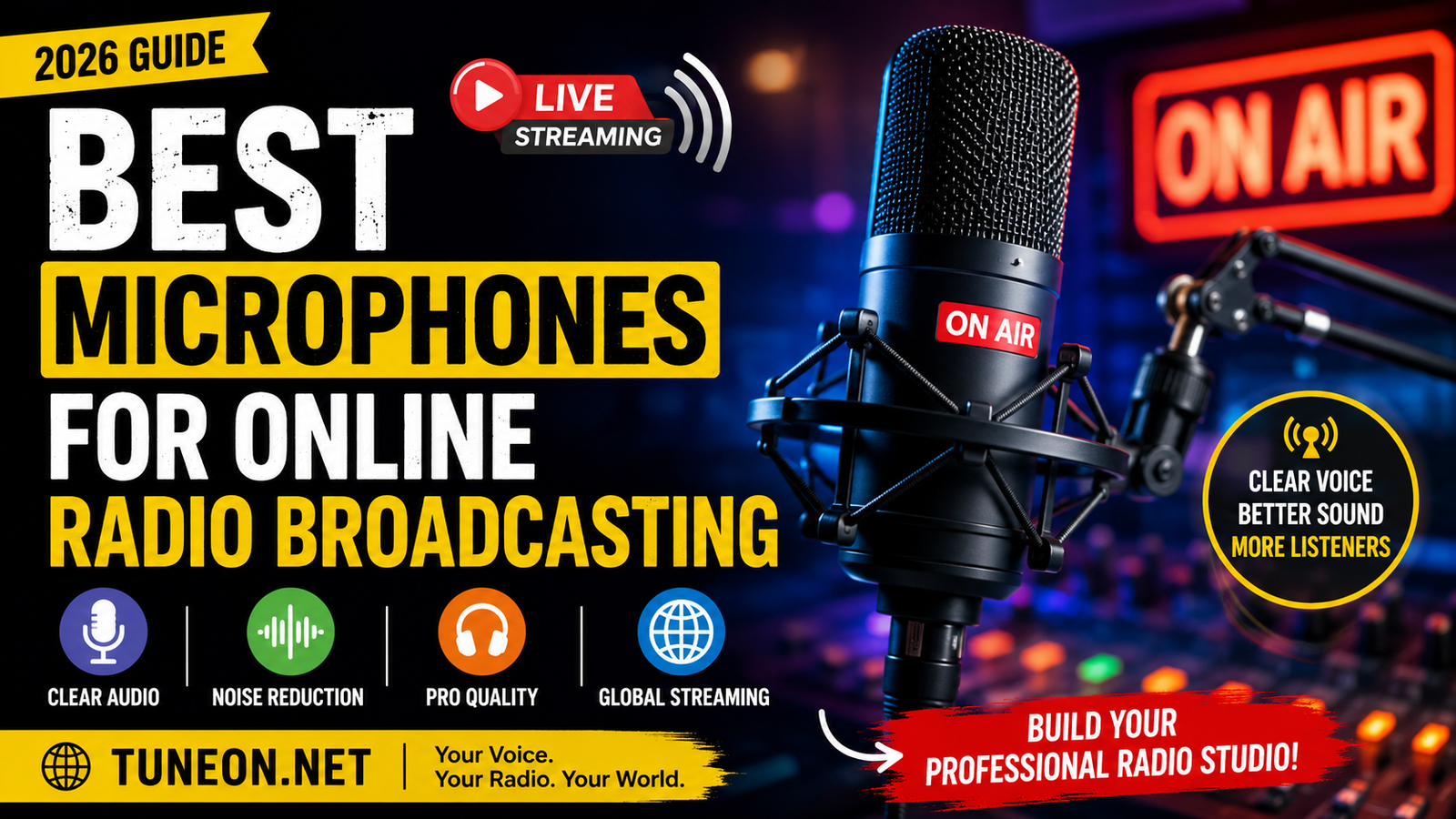
Best Microphones for Online Radio Broadcasting in 2026 – Professional studio equipment for internet radio streaming by Tuneon.net
Starting an online radio station is now easier than ever, but choosing the right equipment can make a huge difference in your sound quality, audience growth, and professional image.
Many successful internet radio stations use affordable but powerful broadcasting tools to stream music, podcasts, sports shows, and live entertainment worldwide. Whether you are launching a small home studio or building a full professional station like TuneOn Radio, investing in quality online radio broadcasting equipment is essential for clear audio, stable streaming, and listener satisfaction.
From microphones and mixers to streaming software and internet connections, every piece of equipment plays a major role in creating a successful online radio station. In this guide, we explore the best equipment for online radio broadcasting in 2026 and provide useful resources to help you build your station professionally.
Best Microphones for Online Radio Broadcasting in 2026
Choosing the best microphones for online radio broadcasting is one of the most important decisions for any internet radio station owner, podcaster, or live presenter. High-quality microphones improve voice clarity, reduce background noise, and create a professional sound that keeps listeners engaged. Whether you are running a home studio or a large online radio platform like TuneOn Radio, investing in the right microphone can significantly improve your broadcasting quality and audience experience.
The best microphones for online radio broadcasting are designed to deliver clear and balanced audio during live streaming, interviews, podcasts, sports commentary, and music programmes. Professional broadcasters often prefer dynamic microphones because they focus mainly on the speaker’s voice and block unwanted background sounds. Condenser microphones are also popular because they provide rich sound detail and are excellent for studio environments with proper soundproofing.
One of the top choices for broadcasters worldwide is the Shure SM7B. This microphone is widely used by radio stations, podcasters, and YouTubers because of its smooth sound quality and excellent noise reduction. Another great option is the Rode PodMic, which is affordable and delivers professional-level audio for online radio broadcasting. The Audio-Technica AT2020 is also highly recommended for beginners who want studio-quality sound at a lower cost.
USB microphones have become increasingly popular for internet radio broadcasting because they are easy to connect directly to computers without requiring additional audio interfaces. Popular USB options include the Blue Yeti and Rode NT-USB microphones. These microphones are ideal for beginner broadcasters, remote interviews, and mobile streaming setups.
When selecting the best microphones for online radio broadcasting, it is important to consider factors such as sound quality, durability, connectivity, and budget. A good microphone should also work well with mixers, audio interfaces, and broadcasting software. Adding accessories like pop filters, boom arms, and soundproof foam can further improve audio quality and create a more professional broadcasting environment.
As online radio continues to grow globally, broadcasters who invest in quality microphones are more likely to attract loyal listeners and improve their station’s reputation. Clear and professional sound remains one of the biggest factors that separates successful online radio stations from average broadcasters in 2026.
Why Audio Quality Matters in Online Radio Broadcasting
The success of any internet radio station depends heavily on audio quality. Even if a station has great music, trending discussions, or entertaining presenters, poor sound quality can quickly drive listeners away. This is why many broadcasters invest in the best microphones for online radio broadcasting to ensure crystal-clear sound and a professional listening experience.
High-quality microphones help remove background noise, improve voice clarity, and make radio shows sound more professional. Online listeners today expect smooth and balanced audio whether they are listening on smartphones, computers, smart TVs, or car audio systems. A poor microphone can produce static noise, echo, or low volume, making the station sound unprofessional and difficult to enjoy.
Professional online radio stations often combine quality microphones with soundproof studios, mixers, and broadcasting software to deliver premium audio. Popular broadcasters and podcasters use microphones such as the Shure SM7B and Rode PodMic because they produce warm and clear voice recordings suitable for live streaming and internet radio.
Audio quality is also important for branding and listener retention. Stations with clean and powerful sound are more likely to gain loyal audiences, attract advertisers, and grow faster online. This is especially important for growing radio platforms like TuneOn Radio that aim to compete with international streaming platforms.
Another major benefit of using the best microphones for online radio broadcasting is improved SEO performance for podcasts and recorded shows uploaded to platforms like YouTube and Spotify. Clear audio increases audience watch time, engagement, and sharing, helping content rank higher online.
Broadcasters should also use accessories like pop filters, microphone boom arms, and acoustic foam panels to improve sound quality further. A stable internet connection and proper streaming software also help maintain smooth audio delivery during live broadcasts.
As online radio broadcasting continues to expand globally in 2026, stations that focus on professional sound quality will have a major advantage in attracting listeners and building long-term success.
Dynamic vs Condenser Microphones for Online Radio Broadcasting
Understanding the difference between dynamic and condenser microphones is very important when choosing the best microphones for online radio broadcasting. Both microphone types are widely used in internet radio studios, podcasts, and live streaming setups, but they perform differently depending on the broadcasting environment and audio needs.
Dynamic microphones are the most popular choice for professional online radio broadcasting because they are durable and excellent at reducing background noise. These microphones focus mainly on the speaker’s voice and block out unwanted sounds such as fans, keyboards, traffic, or room echo. This makes them ideal for home studios and live radio stations that may not have perfect soundproofing. Popular dynamic microphones used by broadcasters include the Shure SM7B and the Rode PodMic.
Condenser microphones, on the other hand, are designed to capture more sound detail and clarity. They are often used in professional recording studios because they produce rich and natural audio quality. Condenser microphones are ideal for voiceovers, interviews, music shows, and podcasts recorded in quiet environments. However, they are more sensitive and can pick up background noise easily. The Audio-Technica AT2020 is one of the most popular condenser microphones for online broadcasters and content creators.
When selecting the best microphones for online radio broadcasting, broadcasters should consider their studio environment, budget, and broadcasting style. Dynamic microphones are better for noisy rooms and live talk shows, while condenser microphones work best in controlled studio spaces with proper acoustic treatment.
Another important factor is connectivity. Some microphones use USB connections for easy plug-and-play broadcasting, while others use XLR connections that require mixers or audio interfaces for professional sound control. Many successful online radio stations combine high-quality microphones with mixers, headphones, and broadcasting software to achieve premium audio quality.
As internet radio broadcasting continues to grow worldwide, choosing the right microphone type can greatly improve listener satisfaction, audience retention, and overall station professionalism. Clear and balanced audio remains one of the biggest keys to success in online broadcasting in 2026.
USB vs XLR Microphones for Online Radio Broadcasting
Choosing between USB and XLR microphones is an important step when selecting the best microphones for online radio broadcasting. Both microphone types are widely used by internet radio stations, podcasters, streamers, and live presenters, but they offer different advantages depending on the broadcaster’s setup and experience level.
USB microphones are very popular among beginners because they are simple to use and easy to connect directly to a computer or laptop. They do not require additional equipment such as mixers or audio interfaces, making them ideal for small home studios and mobile broadcasting setups. USB microphones are affordable and perfect for online radio presenters who want quick installation and reliable sound quality. Popular USB microphones include the Blue Yeti and the Rode NT-USB.
One major advantage of USB microphones is convenience. Broadcasters can start streaming almost immediately after plugging the microphone into their computer. Many USB microphones also include built-in headphone monitoring and volume controls, making them suitable for solo radio presenters and podcasters.
XLR microphones, however, are considered the professional standard in online radio broadcasting. These microphones connect through audio mixers or audio interfaces, providing more control over sound quality and audio processing. XLR microphones usually deliver richer sound, lower latency, and better overall performance for professional radio stations.
Popular XLR microphones used by broadcasters include the Shure SM7B, Electro-Voice RE20, and Audio-Technica AT2020. These microphones are widely trusted by commercial radio stations, sports broadcasters, and podcast studios around the world.
When selecting the best microphones for online radio broadcasting, broadcasters should consider their budget, technical skills, and future expansion plans. USB microphones are excellent for beginners and small stations, while XLR microphones are better for advanced setups that require higher audio quality and professional production.
As online radio broadcasting continues to grow in 2026, many successful stations are upgrading to XLR microphone systems combined with mixers, soundproofing, and automation software to create premium listening experiences for global audiences.
Best Budget Microphones for Online Radio Broadcasting
Finding affordable equipment is important for many beginners starting an internet radio station, and there are several affordable options available when searching for the best microphones for online radio broadcasting. Budget microphones today offer impressive sound quality, durability, and easy setup, making it possible for small online radio stations to sound professional without spending thousands of dollars.
Many successful online broadcasters begin with entry-level microphones before upgrading to premium studio equipment. Affordable microphones can still provide clean voice recordings suitable for live streaming, podcasts, interviews, sports commentary, and music radio shows. The key is choosing a microphone that balances sound quality, durability, and compatibility with broadcasting software.
One of the best budget microphones for online radio broadcasting is the Audio-Technica AT2020. This microphone is popular among beginner radio presenters because it delivers clear studio-quality sound at an affordable price. Another excellent option is the FIFINE USB Microphone, which is easy to install and works well for live internet radio streaming and podcasting.
The Blue Yeti USB Microphone is also widely recommended for online broadcasters because it combines excellent sound quality with simple plug-and-play connectivity. Broadcasters who want a dynamic microphone for noisy environments often choose the Rode PodMic because of its professional voice clarity and strong background noise reduction.
Budget microphones are especially useful for independent broadcasters, community radio stations, students, and startup internet radio platforms. Many online radio stations combine budget microphones with free broadcasting software, affordable mixers, and basic soundproofing to create professional broadcasting studios from home.
When selecting the best microphones for online radio broadcasting on a budget, broadcasters should also invest in accessories like pop filters, boom arms, and headphones to improve sound quality. A stable internet connection and quiet recording environment can also help affordable microphones sound much better during live broadcasts.
As online radio broadcasting becomes more competitive in 2026, budget-friendly broadcasting equipment allows more creators to launch professional radio stations and grow global audiences without major startup costs.
How to Choose the Best Microphones for Online Radio Broadcasting
Choosing the best microphones for online radio broadcasting can greatly improve the sound quality and professionalism of any internet radio station. With so many microphone options available in 2026, broadcasters should carefully consider their studio environment, broadcasting style, budget, and technical requirements before making a purchase.
One of the first things to consider is the type of content being broadcast. Talk shows, interviews, sports commentary, podcasts, and music programmes may require different microphone features. Dynamic microphones are often recommended for live radio broadcasting because they reduce background noise and focus mainly on the presenter’s voice. Popular dynamic microphones include the Shure SM7B and the Rode PodMic.
Broadcasters working in quiet studio environments may prefer condenser microphones because they capture more voice detail and produce richer sound quality. The Audio-Technica AT2020 is a popular condenser microphone widely used for internet radio, podcasting, and voice recording.
Another important factor when selecting the best microphones for online radio broadcasting is connectivity. USB microphones are easier to install and perfect for beginners because they connect directly to computers without extra equipment. XLR microphones, however, require audio interfaces or mixers but provide more professional sound control and better upgrade options for larger radio stations.
Sound quality should always be a top priority. Broadcasters should look for microphones with low background noise, strong voice clarity, and reliable durability. Reading online reviews, watching audio comparison videos, and testing microphones before buying can help broadcasters make better decisions.
Accessories also play a major role in improving microphone performance. Pop filters help reduce harsh vocal sounds, while boom arms improve microphone positioning during live broadcasts. Acoustic foam panels and soundproofing materials can also reduce echo and outside noise inside the studio.
Many successful online radio stations such as TuneOn Radio combine professional microphones with quality mixers, headphones, automation software, and stable internet connections to create premium audio experiences for listeners worldwide.
As internet radio broadcasting continues to expand globally, investing in the right microphone setup can help broadcasters attract more listeners, improve audience retention, and grow a successful online radio brand in 2026.
Best Accessories for Online Radio Broadcasting Microphones
Using the best microphones for online radio broadcasting is important, but adding the right accessories can improve sound quality even more and create a professional broadcasting setup. Many successful internet radio stations invest in microphone accessories to reduce noise, improve comfort, and enhance the overall listener experience during live broadcasts.
One of the most essential microphone accessories is a pop filter. Pop filters help reduce harsh sounds caused by strong vocal pronunciations such as “P” and “B” sounds. Without a pop filter, these sounds can create unwanted distortion during live radio broadcasts and podcasts. Many professional broadcasters use pop filters with microphones like the Shure SM7B and Rode PodMic to achieve smoother and cleaner voice recordings.
Another important accessory is a microphone boom arm. Boom arms allow broadcasters to position microphones correctly while reducing desk vibrations and improving comfort during long radio shows. Adjustable boom arms also help create a cleaner and more organised studio environment for online radio broadcasting.
Shock mounts are also highly recommended for internet radio studios. These accessories reduce vibration noise caused by touching the desk, keyboard typing, or accidental microphone movement during broadcasts. Shock mounts are especially useful for condenser microphones that are sensitive to surrounding sounds.
Professional headphones are another important tool for broadcasters using the best microphones for online radio broadcasting. Headphones help presenters monitor live audio quality, detect background noise, and ensure clear sound during interviews and live streaming sessions. Popular headphone brands include Sony Audio Products and Sennheiser Headphones.
Acoustic foam panels and soundproofing materials also help improve microphone performance by reducing echo and outside noise inside the studio. Even a small home radio studio can sound professional with proper acoustic treatment and microphone placement.
Many growing online radio stations such as TuneOn Radio combine quality microphones with accessories like pop filters, mixers, audio interfaces, and studio lighting to build premium broadcasting environments that attract global audiences.
As online radio broadcasting becomes more competitive in 2026, broadcasters who invest in both high-quality microphones and professional accessories are more likely to deliver better sound quality, increase listener engagement, and grow successful internet radio brands.
Common Mistakes to Avoid When Choosing Microphones for Online Radio Broadcasting
Many beginners make costly mistakes when selecting the best microphones for online radio broadcasting, and these mistakes can negatively affect audio quality, listener experience, and overall station growth. Choosing the right microphone requires understanding your broadcasting environment, technical setup, and long-term goals for your online radio station.
One common mistake is buying expensive microphones without considering the studio environment. Some broadcasters purchase highly sensitive condenser microphones for noisy rooms, which causes background sounds like fans, traffic, keyboards, and echoes to be captured during live broadcasts. In noisy environments, dynamic microphones such as the Shure SM7B or Rode PodMic are often better choices because they focus mainly on the presenter’s voice.
Another mistake is ignoring microphone accessories. Even the best microphones for online radio broadcasting may produce poor sound if broadcasters do not use pop filters, shock mounts, or proper microphone positioning. These accessories help reduce unwanted noise, vibrations, and harsh vocal sounds that can affect live streaming quality.
Some broadcasters also choose microphones based only on price instead of sound quality and compatibility. Expensive microphones do not automatically guarantee professional audio if they are paired with poor internet connections, weak computers, or low-quality mixers. Beginners should focus on creating a balanced broadcasting setup rather than spending all their budget on one device.
Poor microphone placement is another major issue in online radio studios. Placing the microphone too far away can make the audio sound weak and unclear, while placing it too close can cause distortion and breathing noises. Proper microphone positioning helps improve voice clarity and listener comfort during live shows.
Ignoring room acoustics is another common problem. Empty rooms with hard surfaces often create echoes and sound reflections that reduce audio quality. Using acoustic foam panels, curtains, carpets, and basic soundproofing can significantly improve broadcasting sound quality.
Many successful internet radio stations such as TuneOn Radio invest not only in professional microphones but also in soundproofing, mixers, stable internet connections, and reliable broadcasting software to deliver premium listener experiences worldwide.
As online radio broadcasting becomes more competitive in 2026, avoiding these common microphone mistakes can help broadcasters improve sound quality, increase audience retention, and build stronger online radio brands.
Future Trends in Microphones for Online Radio Broadcasting
Technology continues to change the broadcasting industry, and the future of the best microphones for online radio broadcasting looks more advanced than ever in 2026. Online radio stations, podcasters, and live streamers are now using smarter broadcasting equipment designed to improve sound quality, reduce setup complexity, and enhance listener experiences worldwide.
One of the biggest trends in online radio broadcasting is the rise of smart USB microphones with built-in audio processing. Modern microphones now include features such as automatic noise reduction, voice enhancement, real-time monitoring, and built-in digital sound controls. These advanced features help broadcasters achieve professional sound quality without requiring expensive external mixers or audio processors.
Wireless microphone technology is also becoming more popular in internet radio broadcasting. Wireless systems allow presenters to move freely inside studios while maintaining clear audio signals during live shows. This trend is especially useful for video podcasts, live interviews, and multimedia broadcasting studios that combine online radio with video streaming.
Artificial intelligence is also influencing the future of the best microphones for online radio broadcasting. Some new microphones and broadcasting software now use AI-powered voice enhancement to automatically remove background noise, adjust sound levels, and improve vocal clarity during live streaming. These technologies help smaller radio stations compete with larger commercial broadcasters.
Another major trend is the growth of compact home studio equipment. Many online broadcasters are building professional radio studios from bedrooms and small offices using affordable microphones, soundproofing materials, and cloud-based broadcasting software. Popular microphone brands like Shure, Rode, and Audio-Technica continue developing products specifically designed for internet creators and live streamers.
Sustainability is also becoming important in audio equipment manufacturing. Some companies are now focusing on eco-friendly materials, energy-efficient designs, and recyclable packaging for broadcasting products.
Online radio stations such as TuneOn Radio are benefiting from these new microphone technologies by improving audio quality, listener engagement, and global streaming performance. As competition in internet broadcasting increases, stations that adopt modern microphone solutions and smart broadcasting tools are more likely to grow faster and attract larger audiences.
The future of online radio broadcasting will continue to depend heavily on clear and professional sound, making advanced microphone technology one of the most important investments for broadcasters in the years ahead.
Section 10: Final Thoughts on the Best Microphones for Online Radio Broadcasting
Choosing the best microphones for online radio broadcasting is one of the smartest investments any internet radio station can make in 2026. High-quality microphones improve voice clarity, increase listener engagement, and help broadcasters create professional audio experiences that attract larger audiences worldwide. Whether you are starting a small home studio or building a global online radio platform like TuneOn Radio, the right microphone setup can transform your station’s overall performance.
Modern online radio broadcasting now depends heavily on advanced audio technology, stable streaming systems, and professional production tools. Broadcasters who combine premium microphones with quality mixers, automation software, and fast internet connections are more likely to grow successful radio brands and maintain loyal listeners.
Many professional broadcasters continue to trust microphone brands such as Shure, Rode, Audio-Technica, Sennheiser, and Blue Microphones because of their reliable performance and excellent sound quality for internet radio broadcasting.
Broadcasters also depend on streaming and radio automation services such as Shoutcast, Icecast, Radio.co, AzuraCast, and SAM Broadcaster to deliver smooth live streaming experiences to global audiences.
To improve sound production further, many online radio stations use editing and broadcasting tools from Adobe Audition, Audacity, OBS Studio, VirtualDJ, and Mixxx DJ software for professional live audio management.
Professional studio accessories from Focusrite, Behringer, Yamaha Audio, Elgato, and Auralex Acoustics also help broadcasters improve studio sound quality and production efficiency.
For website management and streaming optimisation, broadcasters often use platforms like WordPress, Cloudflare, Hostinger, Speedtest by Ookla, and Google Search Console to improve performance, SEO rankings, and listener accessibility.
As online radio broadcasting continues expanding across Africa and the rest of the world, broadcasters who invest in the best microphones for online radio broadcasting and professional streaming equipment will have a strong advantage in attracting advertisers, increasing audience retention, and building long-term digital media success.
About the Author