
Ghana’s media environment is entering a new phase as traditional broadcasting, online news, streaming platforms and social media increasingly operate alongside one another.
For decades, radio and television were among the country’s most important channels for reaching mass audiences. Today, however, audiences are consuming information in several different ways — listening to live radio on their phones, watching video clips on social platforms, reading breaking news online and following sports and entertainment stories throughout the day.
That change is creating a more competitive media environment while also giving publishers and broadcasters new opportunities to reach audiences in Ghana and abroad.
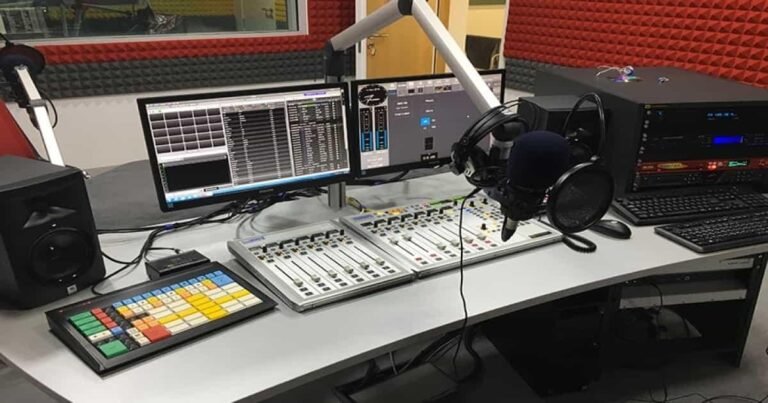
The transformation is particularly visible in radio.
The National Communications Authority’s latest data shows the continued scale of Ghana’s FM broadcasting sector, with 793 authorised FM broadcasting stations and 571 operational stations as of the second quarter of 2026. NCA
But the bigger story is not simply how many stations exist.
It is how audiences are now consuming what those stations produce.
Radio is becoming part of a larger digital ecosystem.
A radio station is no longer necessarily limited to the traditional FM receiver.
Listeners can increasingly encounter a station through its website, mobile phone, online stream, social-media page, podcast, video interview or digital news article.
This means broadcasters are competing not only with other radio stations but also with news websites, YouTube channels, podcasts, streaming services and social media creators.
The result is a media environment in which the same story can move across several platforms within minutes.
A political interview may begin on radio, appear as a video clip online, become a headline on a news website and generate discussion across social media.
Similarly, a sports programme can move beyond live commentary into interviews, analysis, highlights and online discussion.
News consumption is becoming faster.
Online news has changed the expectations of many readers.
People increasingly want to know what happened, why it matters and what happens next without waiting for a newspaper edition or a scheduled broadcast.
This has increased the importance of digital publishing for breaking news, business developments, politics, sports, entertainment and public-interest information.
However, speed also creates a major responsibility for publishers.
The faster information travels, the greater the need to verify claims before publication.
For digital publishers, the challenge is therefore no longer simply producing stories quickly. It is producing accurate, useful and original journalism quickly.
Sports is becoming a major digital content opportunity.
Sports is another area where traditional broadcasting and digital media are converging.
A football match can generate live commentary, pre-match analysis, post-match reactions, player interviews, statistics, fixtures, transfer discussions and social media conversation.
That gives sports publishers and broadcasters multiple opportunities to serve the same audience throughout the day.
Ghanaian football, international football and other sports can therefore become continuous digital content rather than something that only appears during match time.
TuneOn’s existing sports coverage reflects this wider change, with sports stories sitting alongside its radio and general-interest content. TuneOn Radio
Entertainment is no longer limited to showbiz pages.
Entertainment has also changed dramatically.
Artists can release music directly to digital audiences, while interviews and performances can be distributed through radio, websites, YouTube and social platforms simultaneously.
Radio remains valuable because presenters can introduce new music, interview artists and provide context around entertainment stories. Digital platforms then allow those conversations to reach audiences who may not have heard the original broadcast.
For Ghanaian musicians, actors, comedians and other creators, this creates a much wider promotional ecosystem.
Ghanaian audiences are increasingly mobile.
The smartphone is becoming one of the most important tools connecting audiences to media.
A person can listen to a Ghanaian radio station while travelling, read a news story during a break, watch a football clip later and return to a live radio stream in the evening — all from the same device.
This is particularly important for Ghanaians living outside the country.
Online radio and digital publishing give the diaspora another way to remain connected with Ghanaian news, music, sports, entertainment and public discussions.
TuneOn’s own platform is designed around this broader digital listening experience, bringing Ghanaian and worldwide stations together while also publishing news and other content. TuneOn Radio
The future is not radio versus digital
It would be easy to describe the media transformation as a battle between traditional radio and the internet.
But that is probably too simple.
The more likely future is radio plus digital.
A successful broadcaster can use FM to reach its traditional audience while simultaneously using streaming, websites, video and social platforms to reach new listeners.
The same principle applies to digital publishers.
A news website can publish an article, create a short video, discuss the story on a live broadcast and distribute the story through social media.
Each platform can strengthen the others.
What this means for media businesses
The changing media environment also creates new commercial opportunities.
Advertisers increasingly want access to audiences across multiple platforms rather than through one traditional channel.
A media company that can combine radio, digital articles, video, social media and streaming may therefore offer advertisers a broader package.
But audience growth alone is not enough.
Trust, original content, technical reliability and consistent publishing remain important.
For online radio, reliable streaming is particularly important because listeners can quickly leave a service when a stream repeatedly fails. TuneOn’s recent coverage has highlighted the importance of reliable online listening alongside the traditional value of live broadcasting. TuneOn Radio
A wider opportunity for Ghanaian media
Ghana’s media industry is therefore moving beyond the traditional idea of separate radio, television and newspaper audiences.
The modern audience is increasingly multi-platform.
People may discover a story on social media, read the full article on a website, hear an interview on the radio and watch the follow-up video.
That creates an opportunity for Ghanaian media companies to build stronger brands around their content rather than relying on a single distribution channel.
The country’s large broadcasting sector provides an important foundation, but the next stage of growth will increasingly depend on how effectively broadcasters and publishers adapt to digital consumption.
What TuneOn is building
TuneOn’s opportunity sits within this wider transformation.
The platform can serve as more than a station directory by bringing together radio, news, sports, entertainment, music and other digital content.
That means visitors can come to TuneOn to listen to a station, discover a news story, follow sports developments or explore entertainment content rather than visiting the site for only one purpose.
The future of media is increasingly about connecting different forms of content around the audience.
And in Ghana, that transition is already underway.
Secondary keywords:
- Ghana broadcasting industry
- Ghana news websites
- Ghana entertainment news
- Ghana sports news
FAQ
1. How is Ghana’s media landscape changing?
Ghana’s media environment is increasingly combining traditional radio and television with online news, streaming, video and social media platforms.
2. Is radio still important in Ghana?
Yes. The NCA reported 571 operational FM stations out of 793 authorised stations in Q2 2026, demonstrating the scale of Ghana’s broadcasting sector. NCA
3. How is online streaming changing radio?
Streaming allows listeners to access stations beyond the geographic limits of traditional FM coverage, including listeners outside Ghana.
4. What other content can digital media companies provide?
Digital publishers can cover news, sports, entertainment, music, business, technology, lifestyle and other subjects alongside radio.
5. Why should radio stations have an online presence?
An online presence can help stations reach mobile users and audiences outside their traditional FM coverage area.
6. What is the future of Ghanaian media?
The strongest direction is likely to be a combination of traditional broadcasting and digital distribution rather than one replacing the other.
About the Author