
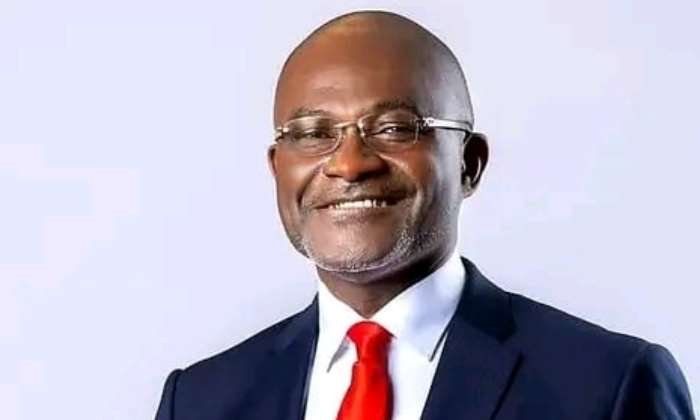
Kennedy Agyapong promises to move important ministries to regions in order to encourage real decentralization.
Kennedy Ohene Agyapong, a candidate for flagbearer of the New Patriotic Party (NPP), has unveiled a daring plan to move important government ministries from Accra to different parts of the nation, calling it a step toward true decentralization and balanced national development.
Speaking during his Salaga North campaign tour, Mr. Agyapong claimed that the capital city’s overabundance of government buildings, business ventures, and employment possibilities had exacerbated inequality and stunted development in other regions of the nation.
“Successful governments have discussed decentralization for decades without taking any concrete steps,” he said. “Accra’s overcrowding, increased unemployment in other areas, and the gradual decline of towns with once-strong economies are the results.”
The Assin Central MP claims that by bringing development possibilities and decision-making closer to the people, his decentralization strategy would radically alter Ghana’s political and economic system. He emphasized that in order for decentralization to be a workable policy that redistributes infrastructure, employment, and power, it must transcend political rhetoric.
Ken Agyapong disclosed that his administration would move ministries according to each region’s distinct advantages. One example would be the relocation of the Ministry of Food and Agriculture to the northern region of the country, where significant cattle potential and lush grounds might facilitate extensive agricultural reform. “The north would attract massive investment in processing, storage, and mechanization—creating jobs and reducing poverty—with the ministry and its agencies located there,” he stated.
Ghana’s oil and gas reserves are located in the Western Region, where the Ministry of Energy would also be based. He clarified that being close to natural resources will improve monitoring of the extractive sector, increase engagement in local content, and encourage energy-related businesses like gas processing and petrochemical facilities.
He stated that in order to benefit from the Volta Region’s beautiful scenery, beaches, waterfalls, and rich cultural legacy, the Ministry of Tourism, Arts, and Culture would move there. He said, “The Volta Region has everything it needs to become Ghana’s center for tourism and the creative arts.”
Ken Agyapong maintained that his decentralization proposal would revitalize inactive communities, reduce the strain on Accra, and change regional economies. “Just because Accra is where the jobs are, it does not make sense for young people from every region to move there,” he remarked. Jobs and investments from the private sector will follow ministry changes. We can revitalize the local economy in this way.
He went on to say that the relocation policy would also encourage the development of new trade and transportation networks, such as better rail and road networks that connect areas based on their economic potential. He said that this would increase trade between regions and open up new markets for manufacturers, craftspeople, and farmers.
Ken Agyapong promised to put in place a strong digital governance structure that would enable real-time cooperation and efficiency across regional offices in order to guarantee smooth coordination among ministries. “Ministries can operate efficiently from any location with digital platforms, data integration, and virtual meetings,” he said.
He came to the conclusion that his approach aims to strengthen the sense of belonging among all Ghanaians and guarantee equity in the allocation of national resources. Regardless of whether they are in Accra, Wa, Koforidua, or Bolgatanga, Mr. Agyapong claimed that “true unity comes when citizens know government is working for them.”
Other stories
The government ought to have swapped US deportees for Ofori-Atta’s extradition—Franklin Cudjoe
11 Powerful Purple Foods!
Kennedy Agyapong declares, “I will never apologize to you, fake pastors.”
A university lecturer and a student were captured on camera in a compromising pose.
The court has granted Gh₵15 million bail, placing Chairman Wontumi on a stop list.
About the Author