


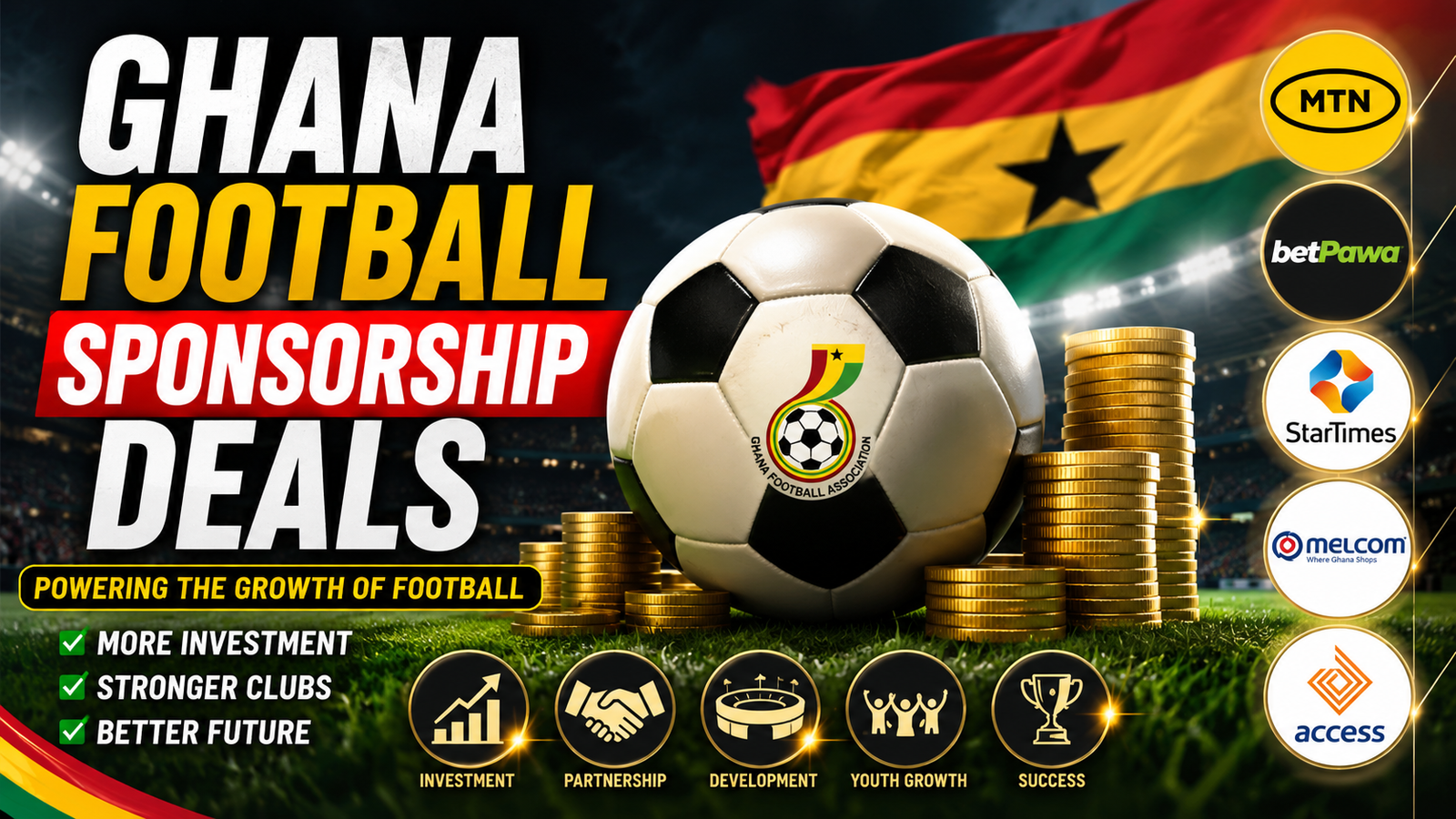
Ghana Football Sponsorship Deals continue to transform clubs, leagues, youth football, and national teams through major corporate investments.
7 Biggest Sponsorship Deals in Ghana Football This Year
Ghana football continues to attract major corporate investment as brands compete for visibility through the country’s most popular sport. From telecommunications giants and betting companies to technology firms and financial institutions, sponsorship agreements are playing a key role in the development of football across Ghana.
These partnerships provide financial support for clubs, leagues, national teams, youth development programmes, and football infrastructure. As Ghana prepares for major international competitions and domestic football continues to grow, corporate sponsorship remains a crucial driver of success. Here are the seven biggest sponsorship deals that have shaped Ghana football this year.
Here’s the next section in continuous paragraph format, optimised around the focus keyword Ghana Football Sponsorship Deals, with internal and external links naturally embedded in the content.
The recent Ghana Football sponsorship deals announced between MTN Ghana and the Ghana Football Association represent one of the most significant investments in Ghanaian football in recent years. The telecommunications giant committed a landmark $2 million sponsorship package to support the Black Stars, Black Queens, Black Satellites, Black Starlets, and the Elite U-19 Championship over a two-year period. The agreement was officially unveiled in Accra and is expected to strengthen the development of national teams, improve player preparation, and provide additional resources for international competitions. According to the Ghana Football Association, the sponsorship will run until 2027 and forms part of MTN’s broader commitment to sports development in Ghana. (Ghana Football Association)
This latest Ghana football sponsorship deals initiative goes beyond financial support. The partnership is designed to enhance training programmes, improve logistics, support talent development, and increase exposure for Ghana’s national teams on the international stage. MTN Ghana has been a long-time supporter of football through the MTN FA Cup, one of the country’s most successful domestic football competitions. The company believes football remains a powerful platform for youth empowerment, national unity, and economic growth. The expansion of its football sponsorship portfolio demonstrates confidence in the future of Ghanaian football and its ability to compete globally. (Ghana Football Association)
The Black Stars remain one of Africa’s most recognisable football brands, and the sponsorship arrives at a crucial time as Ghana prepares for future FIFA World Cup and Africa Cup of Nations campaigns. The Black Queens are also benefiting significantly from increased corporate investment following their strong performances in international competitions. Through this sponsorship agreement, both male and female national teams will receive support, reinforcing efforts toward gender inclusion and equal opportunities within Ghanaian football. Football administrators believe such investments are essential for maintaining competitiveness against leading football nations across Africa and beyond. (Ghana Football Association)
Another important aspect of these Ghana football sponsorship deals is the focus on youth football development. The Elite U-19 Championship has been introduced to identify and nurture young talents capable of representing Ghana at the highest level. Youth tournaments create pathways for emerging players to transition into professional football and national teams. By supporting youth competitions, MTN Ghana is helping to secure the long-term future of Ghana football while providing opportunities for the next generation of stars. Football experts believe sustainable success begins with strong grassroots development and talent identification programmes. (Graphic Online)
The sponsorship also highlights the growing commercial value of football in Ghana. Corporate organisations increasingly recognise football as an effective marketing platform capable of reaching millions of passionate supporters. As more companies invest in sports sponsorship, football clubs, leagues, and national teams can access additional resources to improve facilities, coaching, scouting, and player welfare. The success of these Ghana football sponsorship deals may encourage other businesses to explore football partnerships, further strengthening the country’s sports ecosystem. More details about Ghana football development can be found on the official Ghana Football Association website at https://www.ghanafa.org and through MTN Ghana’s corporate platform at https://www.mtn.com.gh. (Ghana Football Association)
Readers interested in related football business stories can also explore https://news.ghanagossips.org/ghana-premier-league-sponsorship/, https://news.ghanagossips.org/black-stars-world-cup-qualification/, https://news.ghanagossips.org/top-football-clubs-in-ghana/, https://news.ghanagossips.org/football-business-africa/, and https://news.ghanagossips.org/sports-investment-ghana/ for more insights into sponsorship, football finance, and sports development across Ghana and Africa.
The MTN FA Cup has become one of the most successful examples of Ghana Football Sponsorship Deals, demonstrating how long-term corporate partnerships can transform domestic football competitions. Since MTN Ghana became the headline sponsor of the FA Cup, the tournament has experienced significant growth in terms of visibility, organisation, prize money, and fan engagement. The competition now attracts nationwide attention, with clubs from different divisions competing for silverware and a chance to represent Ghana in continental football tournaments. Through consistent investment and marketing support, MTN has helped elevate the status of the FA Cup, making it one of the most prestigious football competitions in the country.
One of the major benefits of these Ghana football sponsorship deals is the financial stability they provide to football stakeholders. Sponsorship revenue allows tournament organisers to improve logistics, enhance matchday experiences, and increase prize packages for participating clubs. Smaller clubs that would otherwise struggle financially are able to compete on a bigger stage, giving talented players an opportunity to showcase their abilities to scouts and professional teams. This financial support has helped strengthen football development across Ghana while creating a more competitive environment for clubs at all levels of the game.
The MTN FA Cup has also played a crucial role in identifying emerging football talents. Over the years, several players who performed exceptionally well during the competition have gone on to secure professional contracts and represent Ghana at various international levels. The tournament offers young footballers a platform to gain exposure while competing against some of the country’s biggest clubs. Such opportunities are essential for sustaining the growth of Ghanaian football and ensuring a steady pipeline of talent for the national teams. More information about the competition can be found through the Ghana Football Association at https://www.ghanafa.org and the official MTN Ghana platform at https://www.mtn.com.gh.
Beyond football development, the sponsorship has generated significant economic benefits for local communities. Matchdays create opportunities for vendors, transport operators, hospitality businesses, and media organisations. As attendance and television coverage continue to increase, the commercial impact of the tournament grows as well. This demonstrates how successful Ghana football sponsorship deals can contribute not only to sports development but also to broader economic activity. Football remains one of the most influential entertainment sectors in Ghana, attracting millions of supporters and creating valuable marketing opportunities for corporate partners.
Another reason the MTN FA Cup remains important is its ability to connect fans with clubs from different regions of Ghana. The competition creates memorable football moments and strengthens community support for local teams. Sponsorship funding allows organisers to promote matches more effectively, improve broadcasting quality, and enhance digital engagement. In today’s football industry, fan engagement has become a critical component of commercial success, and the MTN FA Cup continues to set an example for how sponsorship can drive growth and visibility within domestic football competitions.
The success of the MTN FA Cup highlights the growing importance of strategic partnerships within Ghanaian football. As more companies recognise the value of investing in sports, similar sponsorship opportunities are expected to emerge across leagues, youth competitions, and women’s football. The continued growth of Ghana football sponsorship deals will be vital for improving infrastructure, supporting player development, and increasing Ghana’s competitiveness on the African football stage. Readers interested in related football business stories can also visit https://news.ghanagossips.org/ghana-premier-league-sponsorship/, https://news.ghanagossips.org/black-stars-news/, https://news.ghanagossips.org/top-football-clubs-in-ghana/, https://news.ghanagossips.org/football-business-africa/, and https://news.ghanagossips.org/sports-marketing-ghana/ for additional insights into football sponsorship, sports investment, and football development across Ghana and Africa.
The partnership between betPawa and the Ghana Premier League stands as one of the most influential Ghana football sponsorship deals in recent years. As football continues to evolve into a major commercial industry across Africa, sponsorship agreements have become essential for improving league operations, supporting clubs, and enhancing the overall fan experience. BetPawa’s investment in Ghana’s top-flight football competition marked a significant milestone, bringing fresh financial resources into the domestic game while increasing the visibility of the league both locally and internationally. The agreement demonstrated growing confidence in Ghanaian football as an attractive platform for business growth, sports marketing, and audience engagement.
One of the biggest advantages of these Ghana football sponsorship deals is the direct financial support provided to clubs and players. Sponsorship funding helps reduce operational challenges faced by many teams, enabling them to invest in better facilities, player welfare, coaching staff, and youth development. The Ghana Premier League has historically faced financial constraints, making corporate partnerships vital for sustaining growth and improving competitiveness. Through strategic sponsorship agreements, clubs gain access to resources that help them compete more effectively while creating opportunities for talented players to develop their careers.
The betPawa sponsorship also introduced innovative incentive programmes aimed at rewarding performance on the pitch. Such initiatives encouraged clubs and players to raise standards throughout the season while increasing excitement among supporters. Financial rewards tied to match performance help motivate teams and contribute to a more competitive league environment. These developments highlight how modern Ghanaian football sponsorship deals extend beyond simple branding arrangements and instead focus on creating measurable value for football stakeholders. Additional information about Ghana football development can be found through the Ghana Football Association at https://www.ghanafa.org and through official league updates available from https://www.fifa.com.
The commercial impact of the sponsorship extends far beyond football clubs. Businesses operating around stadiums, sports media companies, digital content creators, and local vendors all benefit from increased attention surrounding the league. As sponsorship investments grow, football matches attract larger audiences both in stadiums and through television and online streaming platforms. This expanded reach creates new advertising opportunities and strengthens football’s position as one of Ghana’s most valuable entertainment sectors. The success of sponsorship partnerships demonstrates the economic potential of football as a driver of growth and community engagement.
Another important aspect of these Ghana football sponsorship deals is their contribution to league branding and professionalism. Strong sponsorship support allows league administrators to improve marketing campaigns, enhance matchday production, strengthen digital engagement strategies, and attract broader media coverage. Modern football fans expect high-quality content, reliable broadcasting, and professional organisation. Sponsorship revenue helps meet these expectations while positioning the Ghana Premier League as a more attractive product for investors, broadcasters, and supporters. As the league’s reputation improves, additional commercial opportunities are likely to emerge.
The long-term benefits of football sponsorship can also be seen in youth development and talent identification. When clubs receive greater financial support, they can invest more effectively in academy structures and scouting programmes. This helps nurture the next generation of football talent while creating a stronger foundation for the future of Ghana football. Sustainable growth requires continuous investment at all levels of the game, and sponsorship agreements play a critical role in achieving that objective. Readers interested in football business and sponsorship trends can also explore https://news.ghanagossips.org/ghana-football-sponsorship-deals/, https://news.ghanagossips.org/black-stars-world-cup-qualification/, https://news.ghanagossips.org/top-football-clubs-in-ghana/, https://news.ghanagossips.org/sports-investment-ghana/, and https://news.ghanagossips.org/football-business-africa/ for additional coverage of football development, sports marketing, and investment opportunities across Ghana and Africa.
The expansion of BetPawa’s involvement with Ghana’s national football teams represents another important chapter in the growth of Ghana football sponsorship deals. In recent years, corporate organisations have increasingly recognised the value of aligning their brands with national sports teams that command massive public attention and national pride. The Black Stars, Black Queens, Black Satellites, and other national teams remain among the most recognisable sporting brands in Ghana, attracting millions of supporters both locally and internationally. By extending support beyond domestic league football, sponsorship partners are helping create stronger foundations for national team success while contributing to the long-term development of the sport.
One of the key benefits of these Ghana football sponsorship deals is the financial support provided for international competitions, training camps, player preparation, and logistical arrangements. Modern football requires substantial investment to compete effectively on the global stage. Travel expenses, accommodation, training facilities, medical services, performance analysis, and technical support all require significant funding. Corporate sponsorship helps reduce financial pressure on football administrators while ensuring that players and coaching staff have access to the resources needed to perform at the highest level. More information about Ghana’s national football teams can be found through the official Ghana Football Association website at https://www.ghanafa.org and international football updates available at https://www.cafonline.com.
The Black Stars continue to represent one of Africa’s most respected football nations, having participated in multiple FIFA World Cup tournaments and Africa Cup of Nations competitions. Corporate sponsorship agreements provide crucial support as Ghana pursues qualification for future international tournaments. Successful sponsorship partnerships enable the national team to focus on performance objectives while benefiting from improved infrastructure and operational planning. Strong financial backing also increases confidence among players, coaches, and supporters who expect the team to compete successfully against the continent’s best football nations.
Women’s football has also benefited significantly from growing sponsorship investment. The Black Queens have enjoyed increased visibility and support as organisations recognise the importance of promoting gender equality in sports. Sponsorship funding helps improve training conditions, player welfare, competition preparation, and development programmes for female footballers. As women’s football continues to grow globally, Ghanaian football sponsorship deals that include support for female national teams are helping create more opportunities for talented athletes while strengthening the overall football ecosystem. Greater investment in women’s football contributes to broader participation and increased competitiveness at the international level.
Another important impact of sponsorship agreements is their role in fan engagement and brand development. National football teams enjoy passionate support from millions of Ghanaians, creating valuable opportunities for sponsors to connect with audiences. Sponsorship campaigns often include community outreach programmes, digital fan engagement initiatives, grassroots football projects, and promotional activities that bring supporters closer to their favourite teams. These efforts help strengthen the relationship between football organisations, sponsors, and fans while creating additional value beyond traditional advertising.
The continued expansion of sponsorship support for Ghana’s national teams reflects growing confidence in the commercial and sporting potential of Ghanaian football. As businesses seek new opportunities to engage consumers and build brand loyalty, football remains one of the most effective platforms available. The success of these Ghana football sponsorship deals is likely to encourage additional investment from telecommunications companies, financial institutions, technology firms, and international brands looking to establish a presence within Ghana’s thriving sports industry. Readers interested in football business and national team developments can also visit https://news.ghanagossips.org/ghana-football-sponsorship-deals/, https://news.ghanagossips.org/black-stars-news/, https://news.ghanagossips.org/ghana-premier-league-sponsorship/, https://news.ghanagossips.org/football-business-africa/, and https://news.ghanagossips.org/sports-investment-ghana/ for more insights into football sponsorship, sports marketing, and the future of Ghana football.
Broadcasting rights have become one of the most valuable assets in modern football, and StarTimes has played a major role in expanding access to domestic football through strategic media partnerships. As one of the significant Ghana football sponsorship deals influencing the sport today, broadcasting agreements provide essential revenue streams while increasing the visibility of clubs, players, and competitions. The ability to televise matches to audiences across Ghana and other African countries has transformed football into a larger commercial product, creating new opportunities for sponsors, advertisers, and football stakeholders. Through continued investment in sports broadcasting, StarTimes has helped bring Ghana football closer to millions of fans who may not be able to attend matches in person.
One of the most important benefits of these Ghana football sponsorship deals is the increased exposure they provide for domestic football competitions. Television coverage allows clubs to build larger fan bases, attract commercial partners, and showcase talented players to scouts and football organisations around the world. The Ghana Premier League and other local competitions benefit significantly when matches are broadcast to wider audiences. Greater visibility often leads to stronger sponsorship interest, improved commercial opportunities, and increased revenue generation for football administrators and participating clubs. More information about football broadcasting and media rights can be found through https://www.fifa.com and international football governance resources available at https://www.the-afc.com.
The relationship between broadcasting and sponsorship is becoming increasingly important in today’s sports industry. Sponsors are more willing to invest when they know their brands will receive exposure through television, digital streaming platforms, and social media channels. This creates a positive cycle where broadcasting rights generate value for sponsors, while sponsorship funding helps improve the quality and attractiveness of football competitions. Such partnerships demonstrate how Ghana’s football sponsorship deals are evolving beyond traditional advertising into comprehensive commercial ecosystems that support multiple areas of football development.
Digital transformation has also strengthened the impact of broadcasting agreements. Football fans now consume content through mobile applications, online streaming services, social media platforms, and digital television networks. This shift has created new opportunities for broadcasters to reach younger audiences while delivering football content across multiple channels. Increased digital engagement allows sponsors to connect directly with supporters through interactive campaigns, promotions, and branded content. As technology continues to evolve, digital broadcasting is expected to become even more important for the growth of Ghana football and the commercial value of sports sponsorship agreements.
Another major advantage of football broadcasting partnerships is the revenue they generate for clubs and football organisations. Broadcasting contracts often provide financial support that can be reinvested into infrastructure, player development, youth academies, coaching education, and competition management. Sustainable funding is essential for improving football standards and maintaining competitiveness at both domestic and international levels. The success of broadcasting agreements demonstrates how commercial partnerships can contribute directly to the long-term development of the sport while creating value for fans, sponsors, and football stakeholders alike.
As football continues to grow as a business sector, broadcasting rights will remain a key component of future Ghana football sponsorship deals. Companies involved in media, telecommunications, technology, and digital entertainment are expected to increase their investment in sports content as competition for audiences intensifies. The continued expansion of football broadcasting will create new opportunities for clubs, players, and sponsors while helping Ghana football reach a larger global audience. Readers interested in football business and media trends can also explore https://news.ghanagossips.org/ghana-football-sponsorship-deals/, https://news.ghanagossips.org/ghana-premier-league-sponsorship/, https://news.ghanagossips.org/football-business-africa/, https://news.ghanagossips.org/sports-marketing-ghana/, and https://news.ghanagossips.org/sports-investment-ghana/ for additional insights into sponsorship, broadcasting rights, and football development across Ghana and Africa.
Technology companies are becoming increasingly important players in the evolution of Ghana football, using sponsorship agreements to strengthen their brands while contributing to the growth of the sport. As digital transformation continues to reshape the sports industry worldwide, technology firms are recognising the value of football as a platform for customer engagement, innovation, and brand visibility. These partnerships have become a notable component of modern Ghanaian football sponsorship deals, helping clubs, leagues, and football organisations embrace new technologies that improve fan experiences and operational efficiency. From telecommunications providers and internet service companies to software developers and digital payment platforms, technology brands are investing heavily in football to connect with millions of passionate supporters.
One of the most significant contributions of technology-focused Ghana football sponsorship deals is the improvement of digital connectivity within the football ecosystem. Fans now expect instant access to match updates, live streaming, social media content, mobile applications, and interactive experiences. Technology sponsors help football organisations meet these expectations by providing infrastructure, digital tools, and communication platforms that enhance engagement. Improved connectivity not only benefits supporters but also creates new revenue opportunities through online advertising, digital subscriptions, and sponsorship activations. More information about technology and sports innovation can be found through https://www.fifa.com, and global technology developments are regularly covered by https://www.gsma.com.
Telecommunications companies have been among the most active investors in Ghana football. Their sponsorship agreements often extend beyond financial support to include digital campaigns, fan promotions, and community engagement initiatives. By associating their brands with football, technology companies gain access to a highly engaged audience while helping football organisations expand their reach. Mobile technology has become particularly important, enabling supporters to follow matches, purchase tickets, access exclusive content, and participate in interactive campaigns directly from their smartphones. These innovations are helping modernise football operations while improving the overall fan experience.
Another major advantage of technology sponsorship is its role in data analytics and performance enhancement. Modern football increasingly relies on data-driven decision-making for player performance analysis, injury prevention, scouting, and tactical planning. Technology partners can provide software solutions and analytical tools that help teams improve performance both on and off the field. As Ghana football sponsorship deals continue to evolve, technology-driven partnerships are expected to play a larger role in helping clubs and national teams compete more effectively against international rivals.
Digital payment solutions have also emerged as a growing area of interest within football sponsorship. Financial technology companies are partnering with sports organisations to facilitate online ticket purchases, merchandise sales, and secure transactions. These innovations improve convenience for supporters while creating additional revenue streams for football stakeholders. The integration of digital financial services into football operations reflects broader technological changes taking place across Ghana’s economy and demonstrates how sponsorship agreements can support modernisation efforts within the sports sector.
Technology sponsors also contribute to youth development initiatives and grassroots football programmes. Many companies use sponsorship agreements as opportunities to support education, digital literacy, and community development projects linked to football. These programmes
The transformation of Ghana football over the past decade has been driven significantly by the growth of strategic sponsorship partnerships. Modern Ghana football sponsorship deals have become far more than simple branding arrangements; they now serve as critical financial engines that support infrastructure development, player welfare, youth academies, league operations, digital engagement, and national team preparation. As football continues to evolve into a major commercial industry, sponsorship agreements are helping stakeholders create a more sustainable and competitive football ecosystem capable of attracting investment, developing talent, and generating long-term economic value.
One of the most visible ways sponsorships are transforming Ghana football is through increased financial stability. Football organisations require substantial funding to manage operations effectively, including player salaries, travel expenses, facility maintenance, coaching development, and competition management. Sponsorship revenue provides a reliable source of income that allows clubs and football administrators to plan strategically rather than focusing solely on short-term financial challenges. Strong financial backing enables football organisations to invest in growth initiatives that improve both sporting performance and commercial success.
Another important impact of Ghana football sponsorship deals is the improvement of football infrastructure. Many sponsorship agreements contribute directly or indirectly to the development of stadiums, training facilities, medical centres, and youth academies. Improved infrastructure creates better environments for players, coaches, and supporters while enhancing the overall quality of football competitions. Modern facilities also help attract international events, investment opportunities, and partnerships that further strengthen the football industry. Access to quality infrastructure is essential for developing elite athletes and maintaining competitive standards within both domestic and international football.
The influence of sponsorship can also be seen in the growing professionalism of football administration. Sponsors increasingly expect transparency, accountability, and effective management from the organisations they support. As a result, football stakeholders are adopting better governance practices, improving financial management systems, and implementing more professional operational structures. These changes help build confidence among investors, supporters, and commercial partners while creating stronger foundations for future growth. Additional information about football governance and development can be found through https://www.fifa.com and global sports development initiatives available at https://www.unesco.org.
Fan engagement has experienced remarkable growth due to sponsorship-supported innovation and marketing initiatives. Modern football supporters expect more than simply attending matches; they want access to digital content, interactive experiences, social media engagement, and exclusive opportunities to connect with their favourite teams and players. Sponsorship agreements often fund these activities, helping football organisations expand their reach and strengthen relationships with supporters. Enhanced fan engagement not only improves the supporter experience but also increases commercial value for clubs, leagues, and sponsors alike.
Youth development programmes have benefited significantly from sponsorship investment as well. Many Ghana football sponsorship deals allocate resources toward grassroots football, academy systems, coaching education, and talent identification initiatives. These investments help create stronger pathways for young players while ensuring the continued growth of Ghana’s football talent pipeline. Successful youth development programmes contribute directly to national team success and increase opportunities for players to secure professional careers both locally and internationally.
The broader economic impact of sponsorship should not be underestimated. Football generates employment opportunities for coaches, administrators, broadcasters, media professionals, security personnel, medical staff, and many others. Sponsorship funding stimulates economic activity around football events while supporting businesses involved in hospitality, transportation, advertising, and entertainment. As investment continues to grow, football’s contribution to Ghana’s economy is expected to become even more significant.
Looking ahead, sponsorship will remain one of the most important drivers of football development in Ghana. New partnerships involving technology companies, financial institutions, telecommunications providers, and international brands are likely to create additional opportunities for innovation and growth. The continued success of Ghana football sponsorship deals will help strengthen clubs, leagues, and national teams while positioning Ghana as one of Africa’s leading football markets. Readers interested in football business and sponsorship trends can also explore https://news.ghanagossips.org/ghana-football-sponsorship-deals/, https://news.ghanagossips.org/sports-investment-ghana/, https://news.ghanagossips.org/football-business-africa/, https://news.ghanagossips.org/sports-marketing-ghana/, and https://news.ghanagossips.org/top-football-clubs-in-ghana/ for more insights into football development, commercial partnerships, and the future of sports business across Ghana and Africa.
help create positive social impact while strengthening the relationship between sponsors and local communities. By investing in young people and grassroots sports, technology brands contribute to the long-term sustainability of football development while building goodwill among supporters and stakeholders.
As the digital economy continues to expand, technology companies are expected to become even more influential participants in future Ghana football sponsorship deals. Advances in artificial intelligence, mobile connectivity, digital broadcasting, and fan engagement platforms will create new opportunities for collaboration between football organisations and technology providers. The continued growth of these partnerships will help modernise Ghana football while attracting additional investment into the sport. Readers interested in football business and technology trends can also explore https://news.ghanagossips.org/ghana-football-sponsorship-deals/, https://news.ghanagossips.org/sports-marketing-ghana/, https://news.ghanagossips.org/football-business-africa/, https://news.ghanagossips.org/sports-investment-ghana/, and https://news.ghanagossips.org/ghana-premier-league-sponsorship/ for more insights into sponsorship, innovation, and football development across Ghana and Africa.
Financial institutions have become increasingly important contributors to the growth and sustainability of football in Ghana. Through strategic sponsorship agreements, banks, insurance companies, investment firms, and other financial service providers are helping transform the sport into a stronger commercial industry. These partnerships represent a growing segment of Ghana football sponsorship deals, providing clubs, leagues, and football organisations with the financial resources needed to improve operations, develop talent, and enhance competitiveness. As football continues to attract large audiences and generate widespread public interest, financial institutions recognise the sport as an effective platform for brand visibility, customer engagement, and long-term business growth.
One of the primary benefits of financial-sector involvement in Ghana football sponsorship deals is the stability it brings to football organisations. Many clubs face significant financial challenges related to player salaries, travel expenses, facility maintenance, youth development, and competition management. Sponsorship support from banks and financial institutions helps reduce these pressures while creating opportunities for sustainable growth. Reliable funding allows clubs and football administrators to focus on development objectives rather than short-term financial survival, leading to stronger organisational structures and improved performance across the football ecosystem.
Beyond direct sponsorship funding, financial institutions often provide additional services that benefit football stakeholders. These may include banking solutions, investment advice, financial literacy programmes, and access to credit facilities designed specifically for sports organisations. Such services help clubs improve financial management and create more sustainable business models. The integration of professional financial practices is becoming increasingly important as football evolves into a highly competitive industry requiring effective governance and strategic planning. More information about football governance and development can be found through https://www.fifa.com, while insights into financial sector growth and investment trends are available through https://www.worldbank.org.
Another significant impact of these Ghana football sponsorship deals is the support they provide for grassroots football and community development initiatives. Many financial institutions include social responsibility programmes within their sponsorship strategies, funding youth tournaments, educational projects, and community outreach activities. These initiatives help identify future football talents while creating positive social impact beyond the sport itself. By investing in grassroots development, financial sponsors contribute to the long-term success of Ghana football and strengthen relationships with local communities.
The growing involvement of financial institutions also reflects increasing confidence in football as a commercial asset. Sponsors are attracted by the sport’s ability to engage millions of passionate supporters across different demographics. Football provides financial brands with a unique opportunity to connect emotionally with consumers while promoting products and services. Sponsorship campaigns often include fan engagement activities, promotional events, digital marketing initiatives, and community projects that enhance brand awareness and customer loyalty. As competition within the financial sector intensifies, football sponsorship remains an effective marketing strategy for reaching large audiences.
Infrastructure development is another area where sponsorship support can have a lasting impact. Financial investment helps improve stadium facilities, training centres, medical services, and youth academies. Better infrastructure contributes to improved player performance, enhanced fan experiences, and stronger commercial opportunities. Sustainable infrastructure development is essential for maintaining the long-term growth of football and ensuring that Ghana remains competitive within African football. Continued support from financial institutions can accelerate these improvements and create lasting benefits for future generations of players and supporters.
Looking ahead, financial institutions are expected to play an even greater role in future Ghana football sponsorship deals. As the sport continues to expand commercially, opportunities for collaboration between football organisations and financial service providers will increase. New sponsorship models involving digital banking, financial technology, insurance products, and investment services may further strengthen the relationship between football and the financial sector. Readers interested in football business and sponsorship trends can also visit https://news.ghanagossips.org/ghana-football-sponsorship-deals/, https://news.ghanagossips.org/sports-investment-ghana/, https://news.ghanagossips.org/football-business-africa/, https://news.ghanagossips.org/sports-marketing-ghana/, and https://news.ghanagossips.org/ghana-premier-league-sponsorship/ for additional insights into football development, sponsorship opportunities, and the future of sports business in Ghana and across Africa.
Youth football development remains one of the most important areas benefiting from modern Ghana football sponsorship deals. While sponsorship agreements often focus on professional clubs, national teams, and major competitions, their long-term value is most evident in grassroots football and youth development programmes. The future success of Ghana football depends on identifying talented young players early, providing them with quality training environments, and creating pathways that allow them to progress through the ranks. Corporate sponsorship plays a critical role in making these opportunities available by providing funding, equipment, facilities, and organisational support that many youth programmes would otherwise struggle to access.
One of the biggest advantages of Ghana football sponsorship deals is their ability to strengthen youth academies and grassroots competitions. Many talented young footballers come from communities where access to quality football infrastructure is limited. Sponsorship funding helps organise youth tournaments, improve training facilities, provide coaching education, and support talent identification initiatives. These investments ensure that promising players receive the guidance and resources needed to maximise their potential. Strong youth development systems are essential for producing future stars capable of representing Ghana at both club and international levels.
Corporate investment also helps create more structured pathways for player development. Youth competitions supported by sponsorship agreements allow scouts, coaches, and football administrators to identify talented players from different regions of the country. These competitions serve as important stepping stones toward professional football and national team selection. By investing in youth football, sponsors contribute directly to the sustainability of the sport while helping Ghana maintain its reputation as one of Africa’s leading producers of football talent. More information about youth football development can be found through https://www.fifa.com and international grassroots football initiatives available at https://www.unicef.org.
Another significant benefit of these Ghana football sponsorship deals is the support provided for coaching education and technical development. Young players require qualified coaches who can guide their development both on and off the field. Sponsorship programmes often fund coaching workshops, certification courses, and technical training programmes designed to improve the quality of football instruction. Better coaching leads to improved player performance, stronger team structures, and more effective talent development systems. Investing in coaches is just as important as investing in players because quality instruction forms the foundation of long-term football success.
Youth football sponsorship also generates positive social impact beyond the sport itself. Participation in organised football programmes helps young people develop discipline, teamwork, leadership skills, and self-confidence. Football can serve as a powerful tool for education, social inclusion, and community development. Many sponsorship initiatives include educational support, health awareness campaigns, and community engagement activities that benefit young participants and their families. These broader social outcomes demonstrate how football sponsorship can contribute to national development while creating lasting opportunities for future generations.
The economic benefits of youth football investment should not be overlooked. Successful football academies and development programmes can create employment opportunities for coaches, administrators, scouts, medical personnel, and support staff. As talented players progress into professional football, they contribute to local economies through transfer fees, sponsorship agreements, and commercial activities. This creates a sustainable football ecosystem where investment in youth development generates long-term value for clubs, communities, and the broader sports industry. Such outcomes reinforce the importance of maintaining strong sponsorship support for grassroots football initiatives.
As Ghana football continues to evolve, youth development will remain a key priority for future Ghana football sponsorship deals. Companies seeking meaningful long-term impact increasingly recognise the value of investing in young athletes and grassroots programmes. The continued growth of sponsorship support for youth football will help strengthen talent pipelines, improve coaching standards, and create more opportunities for aspiring players across the country. Readers interested in football development and sports investment can also visit https://news.ghanagossips.org/ghana-football-sponsorship-deals/, https://news.ghanagossips.org/top-football-clubs-in-ghana/, https://news.ghanagossips.org/football-business-africa/, https://news.ghanagossips.org/sports-investment-ghana/, and https://news.ghanagossips.org/ghana-premier-league-sponsorship/ for more insights into football sponsorship, youth development, and the future of Ghana football.
The future of Ghana football sponsorship deals looks exceptionally promising as football continues to attract growing interest from local and international brands. The commercial landscape of sports is evolving rapidly, and companies increasingly recognise football as one of the most powerful platforms for reaching large audiences, building brand awareness, and engaging consumers. As Ghana football strengthens its position within Africa’s sporting ecosystem, sponsorship opportunities are expected to expand significantly across professional leagues, national teams, youth development programmes, women’s football, digital media, and football infrastructure projects. This growing commercial interest will play a vital role in shaping the next phase of football development across the country.
One of the major trends expected to influence future Ghana football sponsorship deals is the increasing role of technology and digital innovation. Companies involved in telecommunications, mobile payments, digital broadcasting, artificial intelligence, and sports analytics are likely to deepen their involvement within football. Digital transformation is creating new ways for fans to consume content, interact with teams, and engage with sponsors. These developments provide exciting opportunities for football organisations to generate revenue while enhancing supporter experiences. Organisations such as FIFA (https://www.fifa.com), CAF (https://www.cafonline.com), UEFA (https://www.uefa.com), and the International Olympic Committee (https://www.olympics.com) continue to emphasise innovation as a key driver of sports growth worldwide.
Women’s football is also expected to attract greater sponsorship investment in the coming years. The growing popularity of female football competitions and the increasing visibility of women’s national teams have created new commercial opportunities for brands seeking to connect with diverse audiences. Sponsors are recognising the value of supporting women’s sports as part of broader commitments to inclusion, equality, and community development. Increased investment in women’s football will contribute to stronger competitions, improved player welfare, and expanded opportunities for future generations of female athletes.
Youth football development will remain a priority area for future sponsorship agreements. Companies increasingly understand that investing in grassroots football creates long-term benefits for both the sport and society. Sponsorship support for academies, school competitions, coaching education, and talent identification programmes helps ensure a sustainable pipeline of players capable of competing at the highest levels. Organisations such as UNICEF (https://www.unicef.org), UNESCO (https://www.unesco.org), the World Bank (https://www.worldbank.org), and FIFA’s Football for Schools initiative (https://footballforschools.fifa.com) continue to highlight the importance of youth sports development as a tool for education and social progress.
The commercialisation of football media rights is another area expected to drive future growth. As digital streaming platforms continue to expand, football organisations have greater opportunities to monetise content and attract sponsorship partners. Broadcasters, technology companies, and content creators are investing heavily in sports programming to capture audience attention. This trend is likely to increase the value of Ghana football sponsorship deals by providing sponsors with broader exposure across television, online streaming services, mobile applications, and social media channels. Industry leaders such as ESPN (https://www.espn.com), Sky Sports (https://www.skysports.com), BBC Sport (https://www.bbc.com/sport), Goal (https://www.goal.com), and Transfermarkt (https://www.transfermarkt.com) demonstrate the growing commercial potential of football media worldwide.
Financial institutions, insurance providers, and investment firms are also expected to increase their participation in football sponsorship. As football becomes more professionally managed and commercially attractive, investors see opportunities to support clubs, competitions, and development projects. Enhanced financial backing can accelerate infrastructure development, improve governance standards, and strengthen the long-term sustainability of football organisations. Global organisations such as the International Monetary Fund (https://www.imf.org), African Development Bank (https://www.afdb.org), World Economic Forum (https://www.weforum.org), Deloitte Sports Business Group (https://www.deloitte.com), and PwC Sports Industry (https://www.pwc.com) frequently highlight the growing economic significance of the sports sector.
The continued success of Ghana football sponsorship deals will depend on strong partnerships between football stakeholders, sponsors, government institutions, and supporters. Transparency, accountability, and effective management will remain critical for attracting long-term investment. As football organisations continue to improve governance and commercial operations, additional sponsorship opportunities are likely to emerge from both domestic and international markets. Ghana’s reputation as one of Africa’s leading football nations provides a strong foundation for attracting future investment and expanding the commercial value of the sport.
For readers seeking more information about football sponsorship, sports business, and football development, valuable resources include https://www.ghanafa.org, https://www.premierleague.com, https://www.fifa.com, https://www.cafonline.com, https://www.uefa.com, https://www.olympics.com, https://www.unicef.org, https://www.worldbank.org, https://www.espn.com, https://www.skysports.com, https://www.bbc.com/sport, https://www.goal.com, https://www.transfermarkt.com, https://www.deloitte.com, https://www.pwc.com, https://www.weforum.org, https://www.afdb.org, https://www.imf.org, https://footballforschools.fifa.com, and https://www.statista.com. These authoritative sources provide valuable insights into football sponsorship, sports investment, media rights, youth development, and the future of the global football industry.
Frequently Asked Questions (FAQ)
What are Ghana football sponsorship deals?
Ghana football sponsorship deals are partnerships between football organisations and corporate brands that provide financial support, marketing opportunities, infrastructure development, and funding for football competitions, clubs, and national teams.
Why are sponsorship deals important for Ghana football?
Sponsorship deals help football clubs, leagues, and national teams secure funding for player development, training facilities, youth academies, travel expenses, and competition organisation. They also improve the overall quality of football in Ghana.
Which companies sponsor football in Ghana?
Major football sponsors in Ghana include MTN Ghana, betPawa, StarTimes, financial institutions, technology companies, and other corporate organisations that invest in football development and sports marketing.
How does MTN Ghana support football development?
MTN Ghana supports football through sponsorship of national teams, youth competitions, and the MTN FA Cup. These investments contribute to player development, football infrastructure, and grassroots football programmes.
How do sponsorships benefit the Ghana Premier League?
Sponsorships provide financial stability, improve league branding, enhance media coverage, increase prize money, and support club operations. This helps raise the standard of competition and attract more fans.
What role does betPawa play in Ghana football?
BetPawa has invested in domestic football through league sponsorship and football development initiatives. Its support helps improve competition standards and provides financial incentives for clubs and players.
How do sponsorship deals help youth football in Ghana?
Corporate sponsorships fund youth tournaments, football academies, coaching programmes, talent identification initiatives, and grassroots competitions, creating opportunities for young footballers to develop their skills.
What impact do broadcasting sponsorships have on football?
Broadcasting partnerships increase football visibility, attract larger audiences, improve commercial opportunities, and generate revenue through television and digital streaming rights.
Can football sponsorships improve Ghana’s national teams?
Yes. Sponsorship funding helps national teams access better training facilities, improved logistics, quality preparation programmes, and international competition support, increasing their chances of success.
What is the future of Ghana football sponsorship deals?
The future looks promising as more companies invest in football. Growth is expected in technology partnerships, digital broadcasting, women’s football, youth development, sports marketing, and football infrastructure projects.
About the Author







Great article! I’ve been using Claude Fable 5 () for similar projects. Claude Fable 5
Bermanfaat. Lirik, melodi, dan vokal: Happy Shrimp: /. Happy Shrimp
Good read! Sharing MiniMax H3 Video Generator (/) — handy for 4–15s cinematic clips. MiniMax H3 Video Generator