

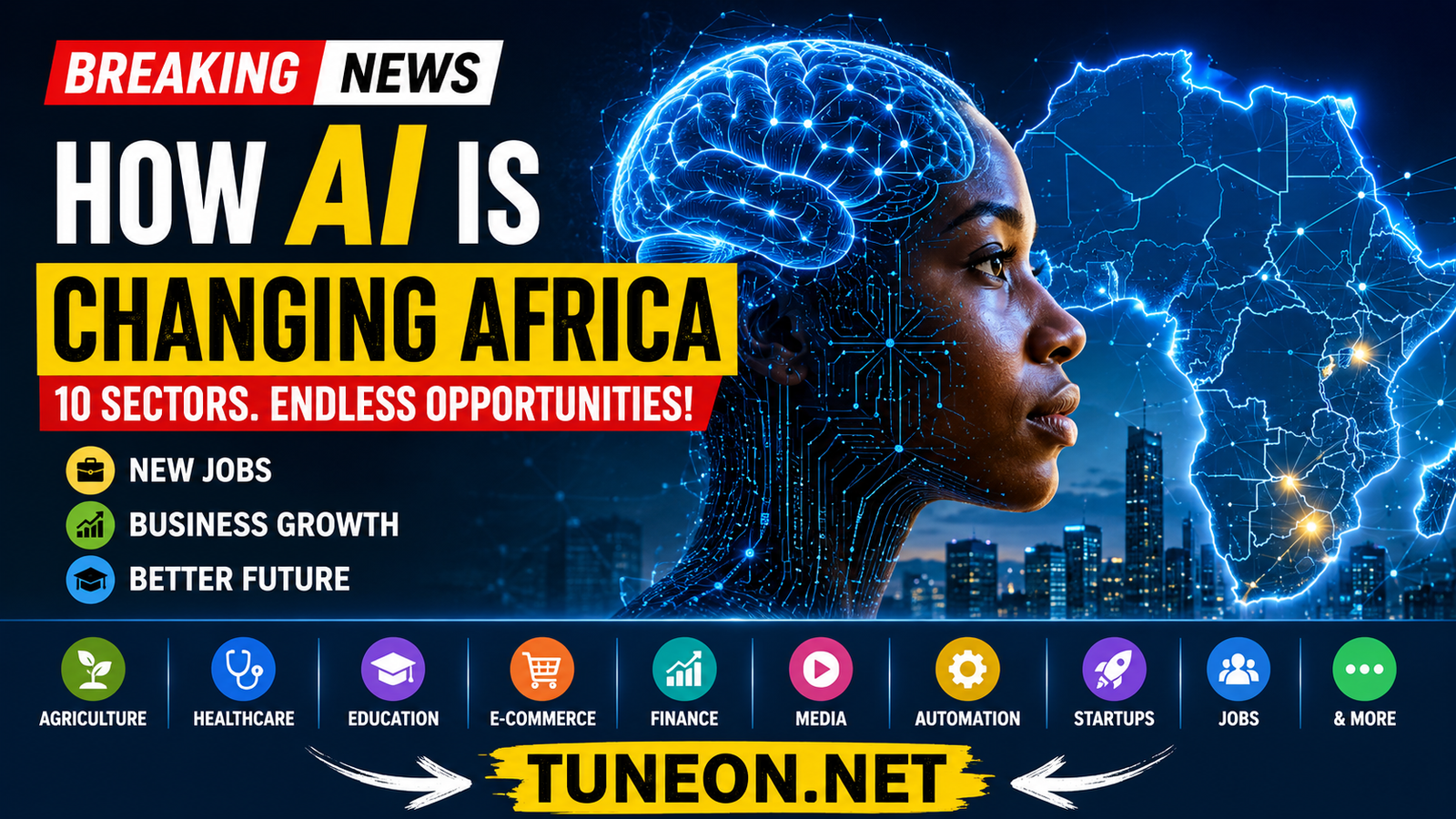
Artificial Intelligence is transforming jobs, businesses, and technology opportunities across Africa in 2026 – tuneon.ne
How Artificial Intelligence Is Changing Jobs in Africa
Artificial Intelligence (AI) is rapidly transforming workplaces across Africa, creating new opportunities while changing traditional jobs in sectors such as banking, agriculture, education, healthcare, transportation, and media. From Ghana to Nigeria, Kenya, and South Africa, businesses are adopting AI-powered systems to improve productivity, customer service, and digital innovation. Many African startups are now using AI tools for automation, data analysis, online marketing, cybersecurity, and mobile banking services.
As internet access and smartphone usage continue to grow across the continent, AI technology is becoming more accessible to businesses and workers. Young Africans are increasingly learning digital skills such as coding, graphic design, AI content creation, and data science to remain competitive in the changing job market. Companies are also investing heavily in automation and machine learning to reduce operational costs and improve efficiency.
At the same time, experts believe AI could replace some repetitive jobs while also creating entirely new careers that did not exist before. This has sparked conversations about digital education, remote work opportunities, and the future of employment in Africa. Governments, universities, and technology companies are now encouraging digital training programs to help workers adapt to the AI-driven economy.
AI is also helping entrepreneurs and content creators across Africa generate income online through blogging, YouTube automation, e-commerce, affiliate marketing, and social media management. With global tech companies expanding their presence in Africa, the continent is becoming one of the fastest-growing digital markets in the world.
AI Is Transforming Banking Jobs in Africa
Artificial intelligence is rapidly changing the banking sector across Africa, making financial services faster, smarter, and more secure. From mobile banking apps to automated customer service systems, banks are increasingly investing in AI-powered technology to improve efficiency and customer satisfaction. The rise of fintech companies and digital banking platforms in countries like Ghana, Nigeria, Kenya, and South Africa has accelerated the adoption of AI solutions in the financial industry.
One major reason why AI is transforming banking jobs in Africa is the growing demand for faster and more secure banking services. AI systems can analyse large amounts of financial data within seconds, helping banks detect fraud, monitor suspicious transactions, and reduce cybercrime. Many banks now use AI chatbots to answer customer questions 24/7 without human assistance. This technology helps financial institutions reduce operational costs while improving customer experiences.
AI is also changing the type of jobs available in African banks. Traditional banking roles such as manual data entry, paperwork processing, and repetitive customer support tasks are gradually being automated. However, this transformation is creating new employment opportunities in areas like cybersecurity, software development, data science, AI engineering, and digital banking support. Young Africans with technology and digital skills are becoming highly valuable in the modern banking industry.
Mobile money services have become extremely popular across Africa, and AI is playing a key role in improving these platforms. AI-powered systems can study customer behaviour, recommend financial products, and provide personalised banking experiences. This has helped millions of people access digital financial services even in rural communities.
Despite concerns about automation replacing some jobs, experts believe AI will mainly transform the banking workforce rather than completely eliminate jobs. Workers who adapt by learning digital and AI-related skills may benefit from new career opportunities in the growing fintech industry. Governments, universities, and technology organisations across Africa are encouraging digital education and AI training to prepare young people for the future of work.
As artificial intelligence continues to grow, the African banking sector is expected to become more innovative, secure, and digitally connected. Businesses and workers who embrace technology will likely benefit the most from the ongoing digital transformation in Africa’s financial industry.
Section 2: AI Is Creating New Tech Careers
Artificial intelligence is opening massive opportunities for new technology careers across Africa. As businesses continue to adopt digital systems, the demand for skilled workers in AI, software development, cybersecurity, and cloud computing is increasing rapidly. Many African youths are now learning digital skills to compete in the growing global technology industry.
One major reason why AI is creating new tech careers is the rise of online businesses, fintech startups, and digital platforms across countries like Ghana, Nigeria, Kenya, Rwanda, and South Africa. Companies are now searching for professionals who can manage AI systems, analyse data, create mobile applications, and improve digital security. This shift is helping many young Africans secure remote jobs and freelance opportunities with international companies.
Technology hubs and innovation centres are also expanding across Africa. Startups are developing AI-powered applications for agriculture, healthcare, transportation, education, and financial services. These companies need software engineers, UI/UX designers, machine learning experts, content creators, and digital marketers to support their growth.
Online learning platforms have made it easier for Africans to study artificial intelligence and related skills from home. Many students and entrepreneurs now use free and paid courses to learn coding, web development, AI content generation, and automation tools. As internet access improves across the continent, more people are joining the digital economy.
Freelancing platforms are another major factor contributing to the growth of AI-related jobs in Africa. Skilled workers can now provide services such as graphic design, AI content writing, programming, SEO optimisation, and video editing to clients worldwide. This has created new income opportunities for thousands of Africans working online.
Although AI may replace some traditional jobs, experts believe it will also create millions of new technology-based careers in the future. Workers who continue learning modern digital skills may benefit the most from Africa’s growing AI and technology industry. Governments and private organisations are also investing in digital education programmes to prepare young people for future job opportunities in artificial intelligence and technology sectors.
Copied Links:
AI Is Changing Agriculture in Africa
Artificial intelligence is transforming agriculture across Africa by helping farmers improve productivity, reduce losses, and increase profits. Agriculture remains one of the largest industries on the continent, employing millions of people in countries such as Ghana, Nigeria, Kenya, Tanzania, and South Africa. With the introduction of smart farming technologies, AI is helping modernise farming practices and improve food production.
One major reason why AI is changing agriculture in Africa is the growing need for efficient farming solutions. Climate change, unpredictable rainfall, crop diseases, and rising food demand have forced farmers to adopt modern technology. AI-powered tools can now predict weather conditions, monitor soil quality, and detect crop diseases before they spread. This allows farmers to make faster and smarter decisions.
Many African farmers now use mobile applications powered by artificial intelligence to receive farming advice, weather forecasts, and market price updates. These digital tools help farmers improve crop yields and reduce financial losses. AI systems can also analyse farming data and recommend the best planting seasons, fertilisers, and irrigation methods.
Drones and automated farming equipment are becoming more popular in several African countries. AI-powered drones can monitor farms, identify unhealthy crops, and help farmers manage large agricultural lands more effectively. Smart irrigation systems also help conserve water while improving crop growth in dry regions.
Artificial intelligence is also creating new employment opportunities in agritech, data analysis, agricultural engineering, and digital farming support. Young entrepreneurs are building innovative farming startups that combine technology with agriculture to solve local challenges. Governments and international organisations are investing heavily in digital agriculture projects to improve food security across Africa.
Although traditional farming methods are still common in many rural communities, experts believe AI will continue transforming the agricultural sector in the coming years. Farmers who embrace technology may increase productivity and compete more effectively in local and international markets. As digital infrastructure improves across Africa, artificial intelligence could play a major role in solving food production challenges and boosting economic growth.
Copied Links:
AI Is Impacting Media and Journalism
Artificial intelligence is rapidly changing the media and journalism industries across Africa. News websites, radio stations, television networks, bloggers, and digital content creators are increasingly using AI-powered tools to improve content production, audience engagement, and online visibility. As digital media continues to grow across the continent, AI technology is becoming an important part of modern journalism and entertainment.
One major reason why AI is impacting media and journalism is the increasing demand for fast and accurate news delivery. Media organisations now use AI systems to analyse trending stories, generate headlines, recommend content to readers, and monitor audience behaviour. AI-powered software can help journalists research topics, edit articles, create captions, and optimise content for search engines.
Many online publishers and bloggers in Africa are also using artificial intelligence tools to improve SEO rankings and increase website traffic. AI content optimisation tools can suggest keywords, improve readability, and help websites rank higher on search engines like Google. This has become important for media companies looking to grow their online audiences and advertising revenue.
Social media platforms also rely heavily on AI algorithms to recommend videos, news stories, and entertainment content to users. African content creators on platforms like YouTube, Facebook, TikTok, and Instagram now use AI-powered editing tools, automated subtitles, and analytics systems to improve engagement and reach more viewers worldwide.
AI technology is also helping radio and television stations automate certain broadcasting tasks. Automated voice systems, smart scheduling software, and digital production tools are helping media companies reduce costs while improving efficiency. Some news organisations are even experimenting with AI-generated news reports and automated translation services for multilingual audiences.
Despite concerns about job replacement, experts believe AI will mainly support journalists and content creators rather than completely replace them. Human creativity, storytelling, and investigative journalism remain highly valuable in the media industry. However, media professionals who learn digital and AI-related skills may have better opportunities in the future job market.
As internet usage and smartphone adoption continue to rise across Africa, artificial intelligence is expected to play an even bigger role in shaping the future of media, entertainment, and digital journalism across the continent.
Copied Links:
AI Is Improving Healthcare Services
Artificial intelligence is transforming healthcare services across Africa by improving disease detection, patient care, medical research, and hospital management systems. Many healthcare providers are now using AI-powered technology to deliver faster and more accurate medical services to patients. As digital health solutions continue to grow, AI is becoming one of the most important technologies in Africa’s healthcare industry.
One major reason why AI is improving healthcare services is the need for better healthcare access in many African countries. In several rural communities, patients struggle to access qualified doctors and medical facilities. AI-powered telemedicine platforms are helping bridge this gap by allowing patients to consult healthcare professionals online through smartphones and digital devices.
Hospitals and clinics are increasingly using artificial intelligence systems to analyse medical records, detect diseases early, and recommend treatment options. AI-powered diagnostic tools can help doctors identify conditions such as malaria, tuberculosis, diabetes, and cancer more quickly. This improves patient outcomes and reduces delays in treatment.
AI is also helping healthcare workers manage large amounts of patient information more efficiently. Digital health systems can organise medical records, schedule appointments, monitor patient recovery, and reduce paperwork. This allows doctors and nurses to spend more time focusing on patient care instead of administrative tasks.
Mobile health applications powered by AI are becoming more popular across Africa. These apps provide health advice, medication reminders, fitness tracking, and mental health support. Some AI systems can even predict disease outbreaks by analysing health data and environmental conditions.
The healthcare sector is also creating new technology-related jobs because of artificial intelligence. Medical data analysts, health software developers, AI engineers, and telemedicine specialists are becoming increasingly important in modern healthcare systems. Universities and healthcare organisations are now investing in digital health training programmes to prepare workers for future opportunities.
Although challenges such as internet access, funding, and digital infrastructure still exist, experts believe artificial intelligence will continue improving healthcare services across Africa. As technology adoption increases, AI could help millions of Africans access faster, safer, and more affordable medical care in the future.
Copied Links:
AI Is Affecting Traditional Office Jobs
Artificial intelligence is significantly changing traditional office jobs across Africa as businesses adopt automation and digital technologies to improve productivity and reduce operational costs. Many companies are now using AI-powered systems to handle repetitive tasks such as data entry, customer support, report generation, scheduling, and document processing. This transformation is reshaping the modern workplace and changing the skills employers are looking for.
One major reason why AI is affecting traditional office jobs is the increasing demand for efficiency in both private and public organisations. Businesses want faster services, lower costs, and improved customer experiences. AI systems can process large amounts of information within seconds, helping companies complete tasks more accurately and efficiently than manual methods.
Many African companies are introducing AI-powered customer service chatbots that can answer questions, process requests, and provide support 24 hours a day. This reduces the workload on human employees while improving response times for customers. AI is also helping organisations automate payroll systems, financial reporting, and human resource management.
Although some repetitive office jobs may become less common, artificial intelligence is also creating new employment opportunities in digital management, cybersecurity, AI maintenance, cloud computing, and business analytics. Companies now need skilled workers who can operate AI systems, analyse data, and manage digital platforms effectively.
Workers across Africa are being encouraged to learn modern digital skills to remain competitive in the changing job market. Online learning platforms and technology training centres are helping many people study coding, AI tools, digital marketing, and software management. Employees who adapt to these changes may benefit from better career opportunities in the future economy.
Remote work has also increased because of digital transformation and AI-powered communication tools. Many professionals can now work online, attend virtual meetings, and manage projects from different locations. This has opened global job opportunities for African workers with digital expertise.
Despite concerns about automation replacing workers, experts believe artificial intelligence will mainly transform office jobs rather than completely eliminate employment. Human creativity, communication, leadership, and problem-solving skills remain highly valuable in modern workplaces. Businesses that combine AI technology with skilled human workers may achieve the best results in the future.
Copied Links:
AI Is Growing Online Businesses
Artificial intelligence is helping online businesses across Africa grow faster by improving marketing, customer service, sales, and digital operations. Entrepreneurs, bloggers, e-commerce store owners, and content creators are increasingly using AI-powered tools to manage their businesses more efficiently and reach larger audiences online. As internet usage continues to expand across the continent, AI is becoming one of the most valuable technologies for digital business growth.
One major reason why AI is growing online businesses is the increasing popularity of e-commerce and digital entrepreneurship in Africa. Many businesses now use AI systems to automate tasks such as customer support, product recommendations, social media management, and email marketing. This allows business owners to save time and improve customer experiences.
AI-powered chatbots are becoming very common on websites and online stores. These systems can answer customer questions instantly, process orders, and provide support 24 hours a day. Small businesses that previously struggled to manage customer communication can now operate more professionally with automated AI tools.
Digital marketing has also improved because of artificial intelligence. AI systems can analyse customer behaviour, identify trending products, and recommend advertising strategies that help businesses attract more customers. Many African entrepreneurs now use AI tools for SEO optimisation, keyword research, content creation, and social media advertising to increase website traffic and online visibility.
Content creators, YouTubers, and bloggers across Africa are also benefiting from AI technology. AI-powered video editing tools, graphic design software, automated captions, and voice generation systems are helping creators produce content faster and more efficiently. This has created new opportunities for online income through blogging, YouTube monetisation, affiliate marketing, and sponsored content.
Artificial intelligence is also helping startups improve financial management and online security. AI systems can detect fraud, analyse business performance, and automate accounting processes. This makes it easier for businesses to manage operations and reduce financial risks.
Although competition in the digital business world continues to grow, experts believe AI will help African entrepreneurs scale their businesses faster in the future. Businesses that adopt modern technology and digital strategies may have a better chance of succeeding in the growing online economy across Africa.
Copied Links:
AI Is Supporting Education and Learning
Artificial intelligence is transforming education and learning across Africa by making digital education more accessible, interactive, and effective. Schools, universities, online learning platforms, and educational organisations are increasingly adopting AI-powered technologies to improve teaching methods and help students learn more efficiently. As internet access and smartphone usage continue to rise across the continent, AI is becoming an important part of Africa’s educational future.
One major reason why AI is supporting education and learning is the growing demand for digital learning opportunities. Many students in Africa now use online platforms to access educational materials, virtual classrooms, and professional training courses from anywhere. AI-powered systems can personalise learning experiences by analysing student performance and recommending lessons based on individual learning needs.
Educational institutions are also using artificial intelligence to automate administrative tasks such as grading, attendance tracking, and academic record management. This helps teachers focus more on teaching and student support instead of paperwork. AI chatbots and virtual tutors are also helping students receive instant answers to academic questions at any time.
Online learning platforms have become extremely popular across Africa because they allow students to learn valuable digital skills from home. Many young people are studying coding, graphic design, artificial intelligence, digital marketing, cybersecurity, and software development through online courses. This is helping prepare students for future job opportunities in the growing digital economy.
AI technology is also improving access to education in rural communities where schools and qualified teachers may be limited. Mobile learning applications powered by AI can provide educational content through smartphones, helping students continue learning even in remote areas. Translation and speech-recognition technologies are also helping educational materials reach people who speak different languages across Africa.
The rise of AI in education is creating new career opportunities for teachers, software developers, educational content creators, and digital learning specialists. Governments and private organisations are investing heavily in digital education programmes to improve technology skills among young Africans.
Although challenges such as internet costs and limited digital infrastructure still exist, experts believe artificial intelligence will continue transforming education across Africa in the coming years. Students who embrace digital learning and AI-related skills may have better opportunities in the future workforce and global economy.
Copied Links:
The Future of AI Jobs in Africa
The future of artificial intelligence in Africa looks very promising as businesses, governments, startups, and educational institutions continue investing in digital technology and innovation. AI is expected to transform industries such as banking, healthcare, agriculture, media, transportation, education, and e-commerce over the next decade. As internet access and smartphone usage continue to expand across the continent, more Africans are expected to benefit from AI-powered opportunities and digital careers.
One major reason why the future of AI jobs in Africa is attracting global attention is the continent’s young and growing population. Millions of young Africans are learning digital skills such as coding, graphic design, software engineering, cybersecurity, AI content creation, and data analysis. This is helping prepare the workforce for future technology-driven jobs and remote work opportunities.
Artificial intelligence is also expected to increase the demand for skilled professionals in machine learning, robotics, cloud computing, fintech, digital marketing, and business automation. Companies across Africa are increasingly searching for workers who understand AI systems and digital tools. Workers who adapt to technological changes may have better employment opportunities in the future digital economy.
Governments and international organisations are also investing in technology education and startup ecosystems to support AI innovation across Africa. Technology hubs and digital training centres are helping entrepreneurs build AI-powered solutions for local and global markets. Experts believe Africa could become one of the world’s fastest-growing technology regions if digital infrastructure continues improving.
Although artificial intelligence may automate some repetitive jobs, it is also expected to create entirely new industries and career paths. Human creativity, leadership, communication, and problem-solving skills will remain highly valuable even as automation increases. Businesses that combine AI technology with skilled human workers may achieve the strongest growth in the future.
As Africa continues embracing digital transformation, artificial intelligence could play a major role in economic development, job creation, and global innovation. Countries that invest in education, internet access, and technology infrastructure may benefit the most from the future AI revolution.
Top Direct Website Links About AI and Technology
- OpenAI
- Google AI
- Microsoft AI
- IBM AI
- Meta AI
- Amazon Web Services AI
- Coursera AI Courses
- Udemy AI Courses
- LinkedIn Learning
- Khan Academy
- UNESCO AI Education
- World Economic Forum AI
- TechCrunch
- Wired Technology News
- MIT Technology Review
- HubSpot AI
- Shopify AI Tools
- GitHub
- Google Cloud AI
- NVIDIA AI
FAQ
What is artificial intelligence?
Artificial intelligence is technology that allows computers and machines to perform tasks that normally require human intelligence, such as learning, problem-solving, and decision-making.
How is AI changing jobs in Africa?
AI is transforming industries such as banking, healthcare, agriculture, education, media, and online businesses by automating tasks and creating new digital career opportunities.
Can AI create jobs in Africa?
Yes. Artificial intelligence is creating new careers in software development, cybersecurity, digital marketing, machine learning, data analysis, and online entrepreneurship.
Which African industries are benefiting most from AI?
Banking, fintech, healthcare, agriculture, education, media, transportation, and e-commerce are among the fastest-growing sectors using AI technology in Africa.
Why is AI important for Africa’s future?
AI can improve productivity, boost innovation, create new businesses, and help African countries compete in the global digital economy.
About the Author