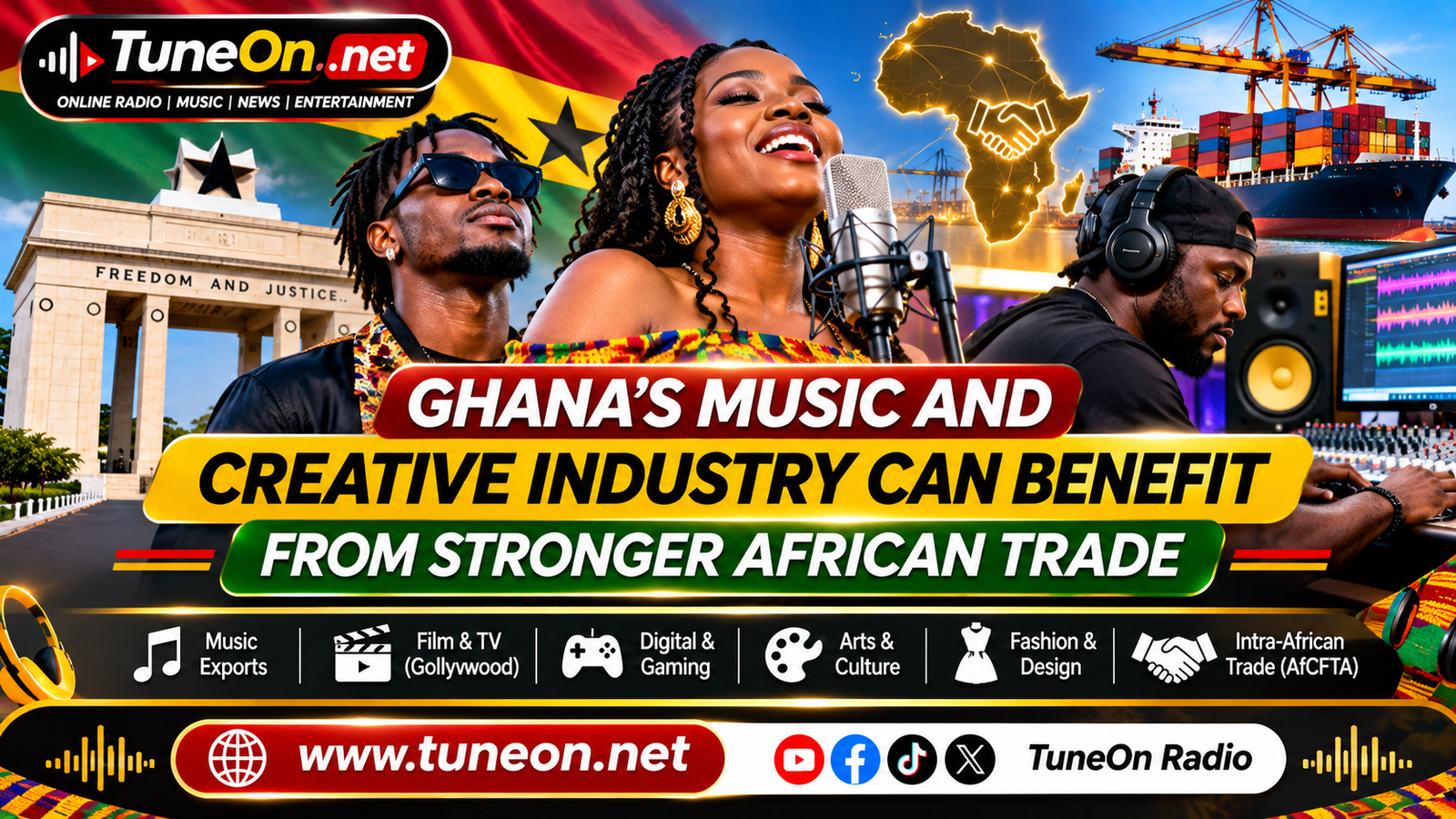
Ghana's musicians and creative businesses can build international audiences through professional partnerships and digital distribution
Ghana’s Creative Industry Must Look Beyond Local Markets to Build International Opportunities
Ghana’s music and creative industries have an opportunity to strengthen their international reach by treating export development as more than a matter of sending products abroad. The recent increase in China’s imports from Africa has renewed attention on the importance of market access, product quality and the ability of African businesses to compete internationally.
While trade in physical goods is different from the distribution of music and entertainment, the wider lesson is relevant to Ghanaian musicians, record labels, producers, event organisers and creative entrepreneurs: international opportunities require preparation, reliable business structures and an understanding of overseas audiences.
The Ghana News Agency reported that China’s imports from Africa rose by 23.3 per cent year-on-year by the end of September 2026, as a zero-tariff policy for eligible African imports took effect.
Ghanaian music already has an international audience.
Ghanaian music has travelled beyond the country’s borders through radio, live performances, streaming platforms and the Ghanaian diaspora.
Genres such as highlife, hiplife, gospel, Afrobeats and dancehall have helped Ghanaian performers connect with listeners in different countries. International collaborations and digital distribution have also made it easier for artists to reach audiences without relying entirely on traditional record distribution.
However, visibility does not always translate into sustainable income. Artists and creative businesses need effective distribution, rights management, promotion and commercial partnerships to benefit from international attention.
Why professional preparation matters
A musician seeking opportunities abroad needs more than a popular song. Professional recordings, clear ownership of music rights, reliable metadata, appropriate distribution agreements and a consistent promotional strategy all contribute to building a sustainable career.
For event organisers, international expansion requires planning around venues, ticketing, travel, sponsorship and audience demand.
Radio stations and digital media platforms can also support the process by promoting Ghanaian talent, providing interviews, highlighting new releases and connecting local artists with listeners overseas.
The diaspora as a bridge
Ghanaians living abroad can help connect local creative businesses with international audiences. Diaspora communities often maintain strong cultural links through music, festivals, religious programmes and entertainment events.
Artists and promoters can build on these connections through carefully organised performances, digital campaigns and partnerships with established community organisations.
The goal should be to develop long-term relationships rather than relying only on one-off promotional events.
Digital platforms have changed music promotion.
Streaming services and social media have reduced some of the traditional barriers to reaching overseas listeners. A Ghanaian artist can release music digitally and promote it to audiences in several countries.
But the digital environment is competitive. Artists must understand their audience, create consistent content and pay attention to how their music is being discovered and consumed.
Copyright protection is also essential. Musicians should understand the ownership of recordings and compositions, the terms of distribution agreements and the process for collecting royalties.
What radio can contribute?
Radio remains an important platform for discovering music and building artist identity. Stations can help by giving emerging musicians opportunities to introduce their work, discussing the stories behind new releases and creating programmes that showcase Ghanaian music.
Interviews, live sessions, music charts and industry discussions can connect audiences with artists while helping listeners discover a wider range of local talent.
Radio can also work with event organisers, record labels and digital platforms to strengthen the visibility of Ghanaian creative work.
Building a sustainable international presence
Ghana’s creative sector can learn from the wider conversation about African businesses entering international markets. Success requires quality, organisation, clear commercial arrangements and an understanding of the audience being targeted.
For musicians, this means treating music as both an artistic product and a professional business. For promoters and media organisations, it means building partnerships that create lasting value.
International recognition is important, but sustainable careers depend on the systems behind the music.
Frequently asked questions
1. How can stronger African trade benefit Ghana’s music industry?
It can help Ghanaian musicians reach new audiences, secure international bookings, distribute music across borders and develop partnerships with African entertainment companies.
2. What is AfCFTA?
The African Continental Free Trade Area is an agreement designed to increase trade between African countries by reducing trade barriers and improving access to markets.
3. Can Ghanaian musicians earn more from other African markets?
Yes. Opportunities may include streaming revenue, concerts, licensing, sponsorships, collaborations and music distribution, although success depends on marketing, contracts and audience demand.
4. How can Ghana’s film industry benefit?
Stronger regional trade can encourage film partnerships, cross-border distribution, co-productions, investment and access to wider audiences.
5. What other creative sectors could benefit?
Fashion, visual arts, photography, gaming, animation, publishing, advertising and digital content production could all benefit from stronger regional business connections.
6. What challenges face Ghana’s creative industry?
Challenges include financing, copyright protection, piracy, distribution costs, inconsistent royalty systems, infrastructure and limited access to international markets.
7. How can young Ghanaian creatives take advantage of these opportunities?
They can develop professional portfolios, protect intellectual property, build partnerships, use digital distribution platforms and explore regional festivals and business networks.
8. Where can readers get Ghana music and entertainment updates?
Visit TuneOn.net for music, radio, entertainment and creative-industry updates.
1. African Continental Free Trade Area (AfCFTA) – Continental trade agreement and opportunities.
2. Ghana Ministry of Tourism, Culture and Creative Arts – Ghana’s tourism and creative-sector policies.
3. Ghana Copyright Office – Copyright protection and intellectual property information.
4. UNESCO – Cultural industries and creative-economy research.
5. World Intellectual Property Organization (WIPO) – Creative industries and intellectual property.
About the Author